


update: 25/01/26
Reignition Grammar
METHOD
Re-gramma is a study in design, form, and the visual construction of space. This document does not propose any physical or scientific theory. References to such fields are used strictly as interpretative tools: they help formalize the method, examine it in detail, and clarify morphological and structural analogies that emerge during the process.
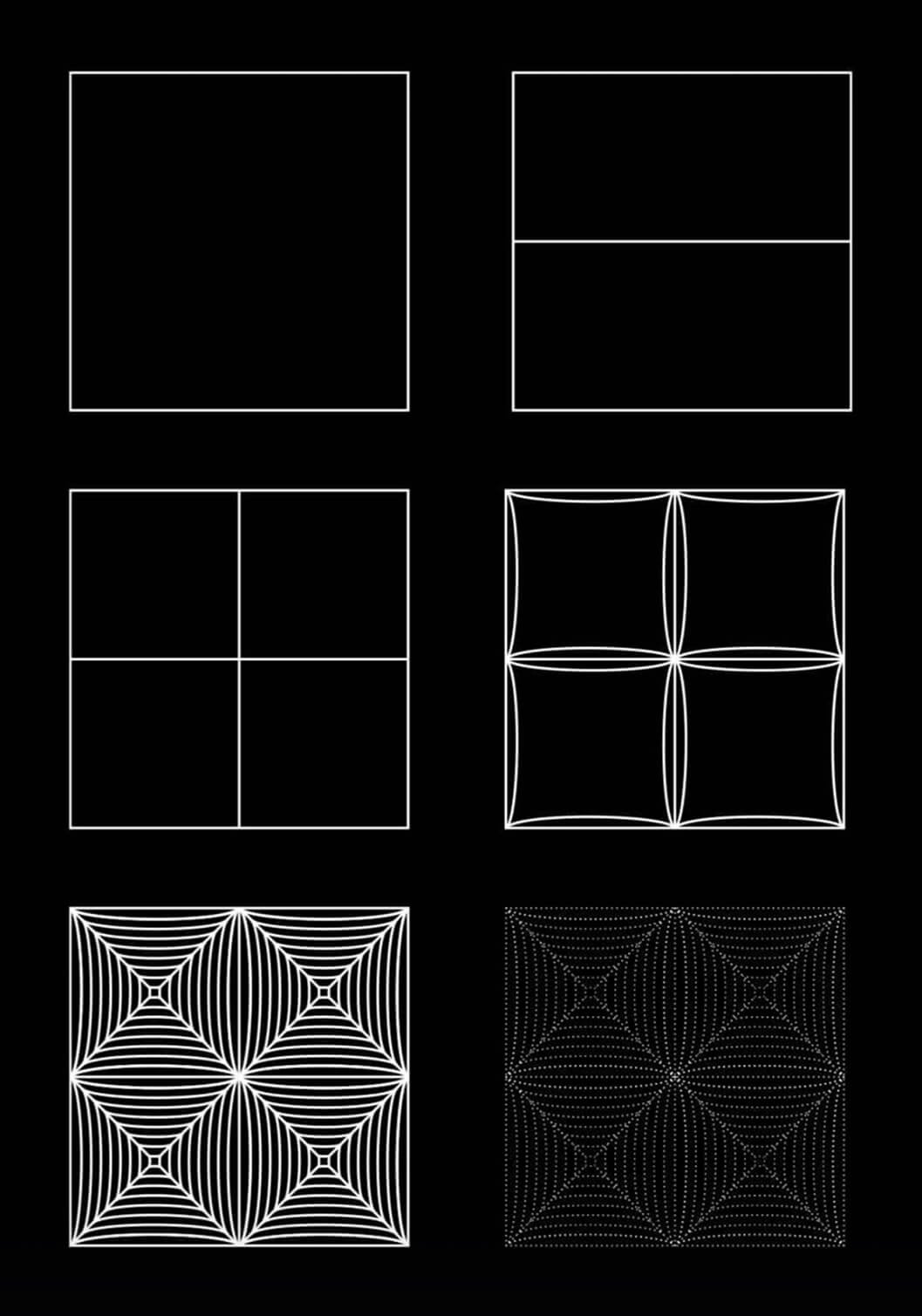
The method originates from a long-term manual practice developed over more than a decade. Starting from a figure or a matrix, the internal space is constructed through successive line propagations, gradually leading the figure toward an internal zone of equilibrium.
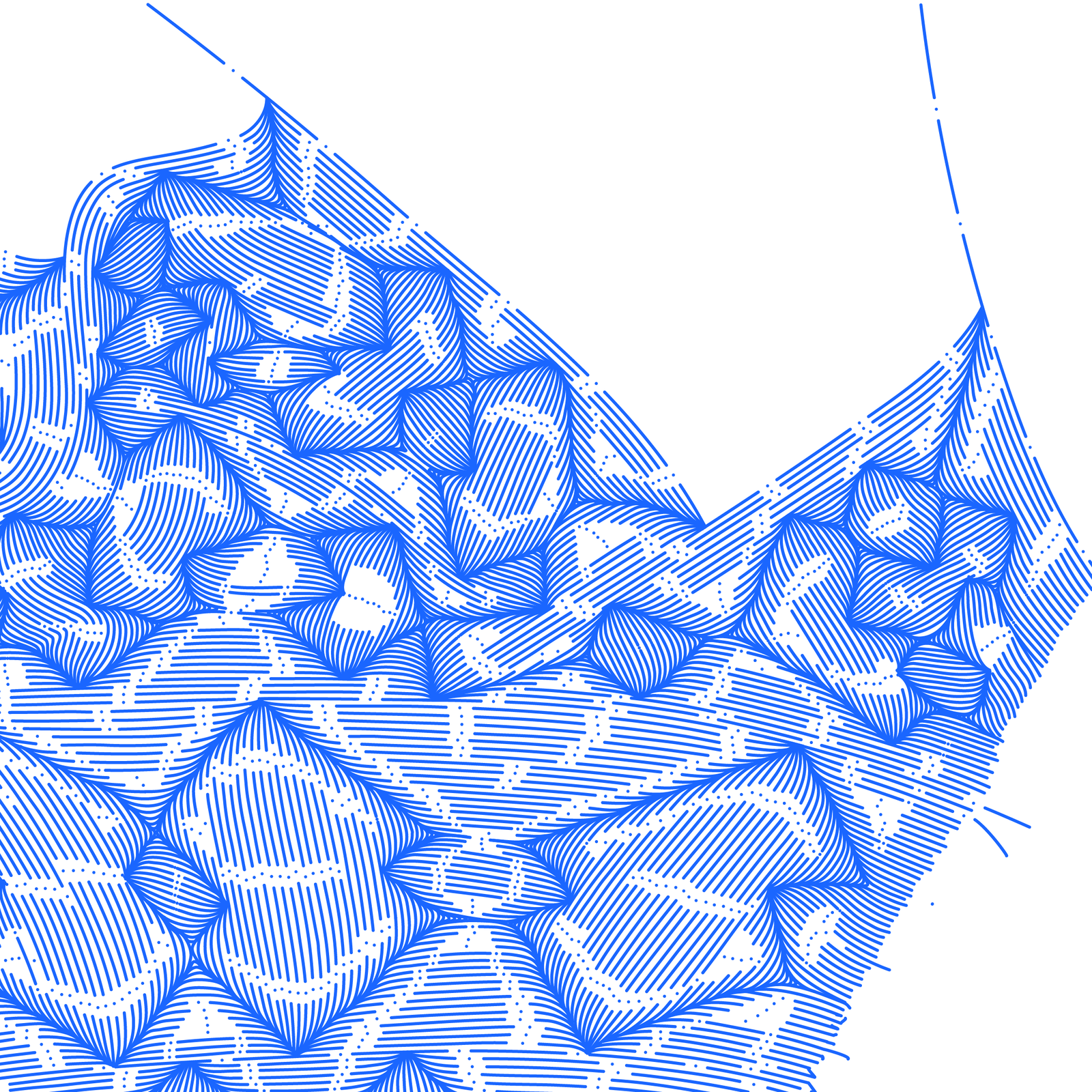
Lines effectively generate a field through accumulation. If we consider a matrix, as the process advances its visibility progressively diminishes until it disappears. The initial structure is not removed: it is absorbed by the field it generates and continues to act as an internal structural memory of the process.
BASIC LOGIC
The method can be described as follows:
– initial poles are defined
– propagation starts from these poles
– propagations meet and define internal thresholds
– intersections generate nodes
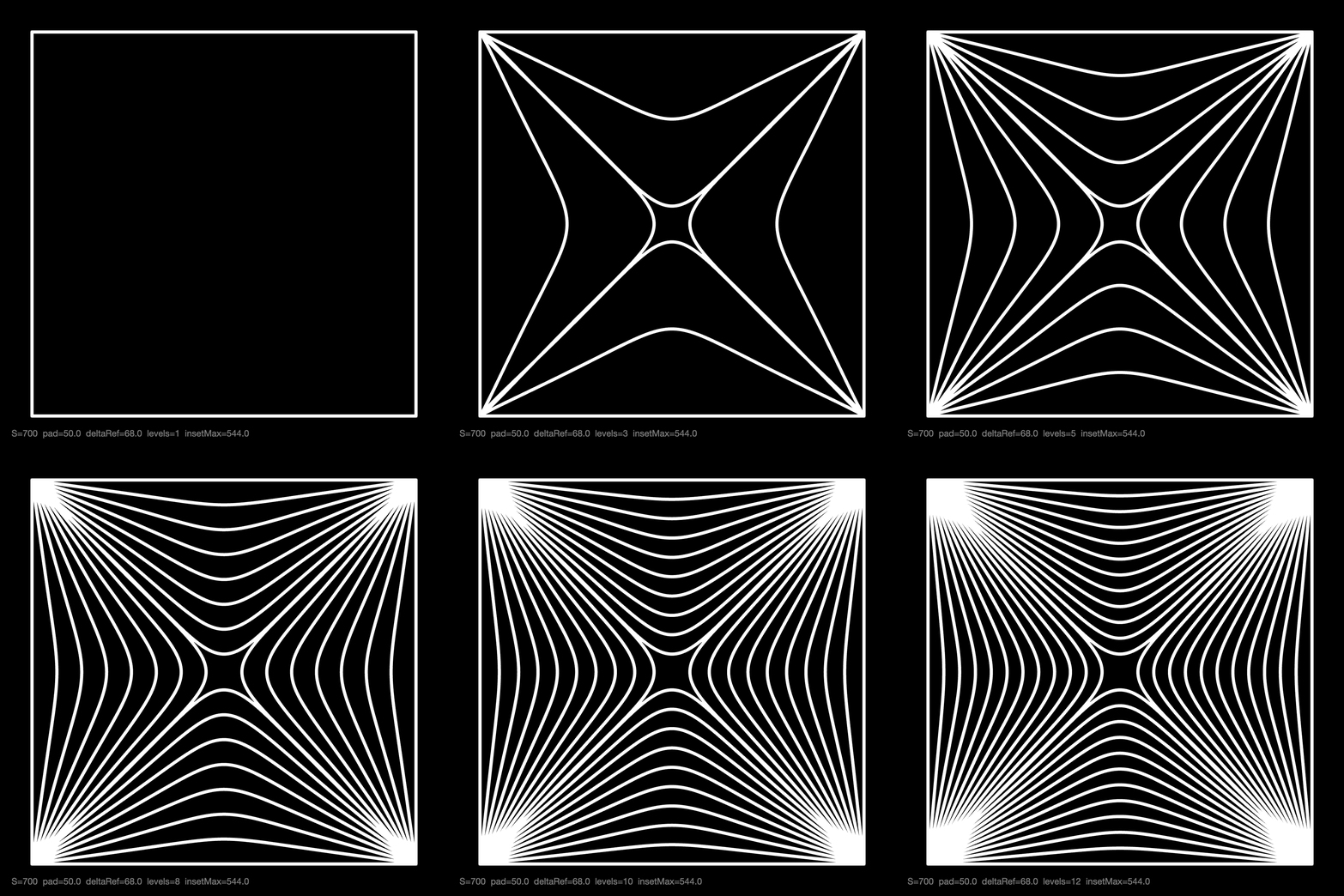
– the field densifies until saturation
METHOD PRINCIPLES
Concurrent propagation — the field emerges from multiple fronts advancing simultaneously.
Saturation and equilibrium — accumulation leads to an internal balance, often perceived as a center.
Matrix absorption — the initial structure is progressively integrated into the field while remaining active as an underlying framework.
Struttura operativa del metodo
1. Initial domain
The process always unfolds within a closed domain.
The initial figure is not merely a container: it defines the constraints, symmetries, and equilibrium conditions of the field.
2. Generators
3. Propagation
4. Concurrency
5. Collision
6. Emergent structure
7. Reignition
8. Saturation
9. Structural memory
REIGNITION
Reignition introduces a discontinuity in the process: the field does not simply reach saturation, but can reactivate from the internal structures it generates.
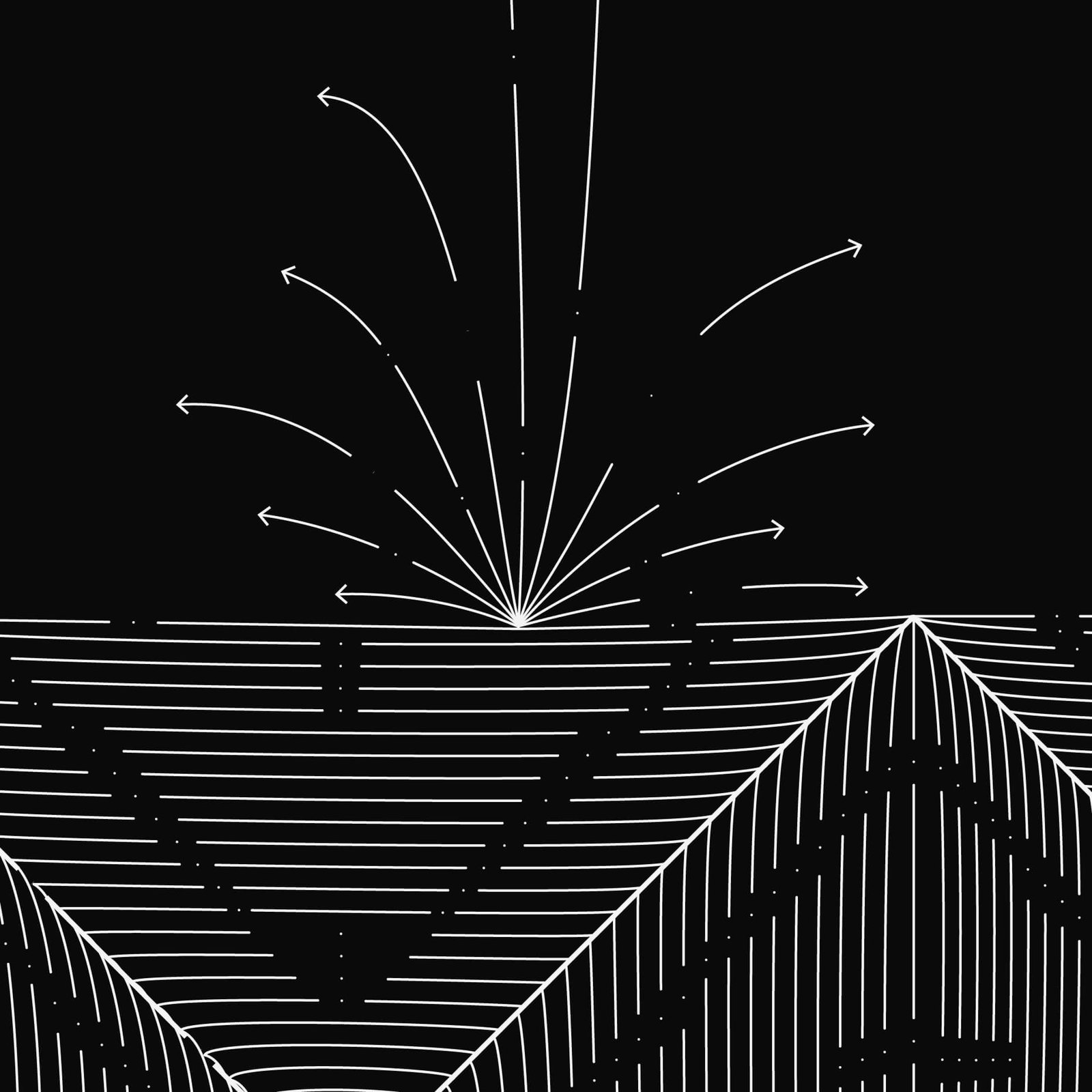
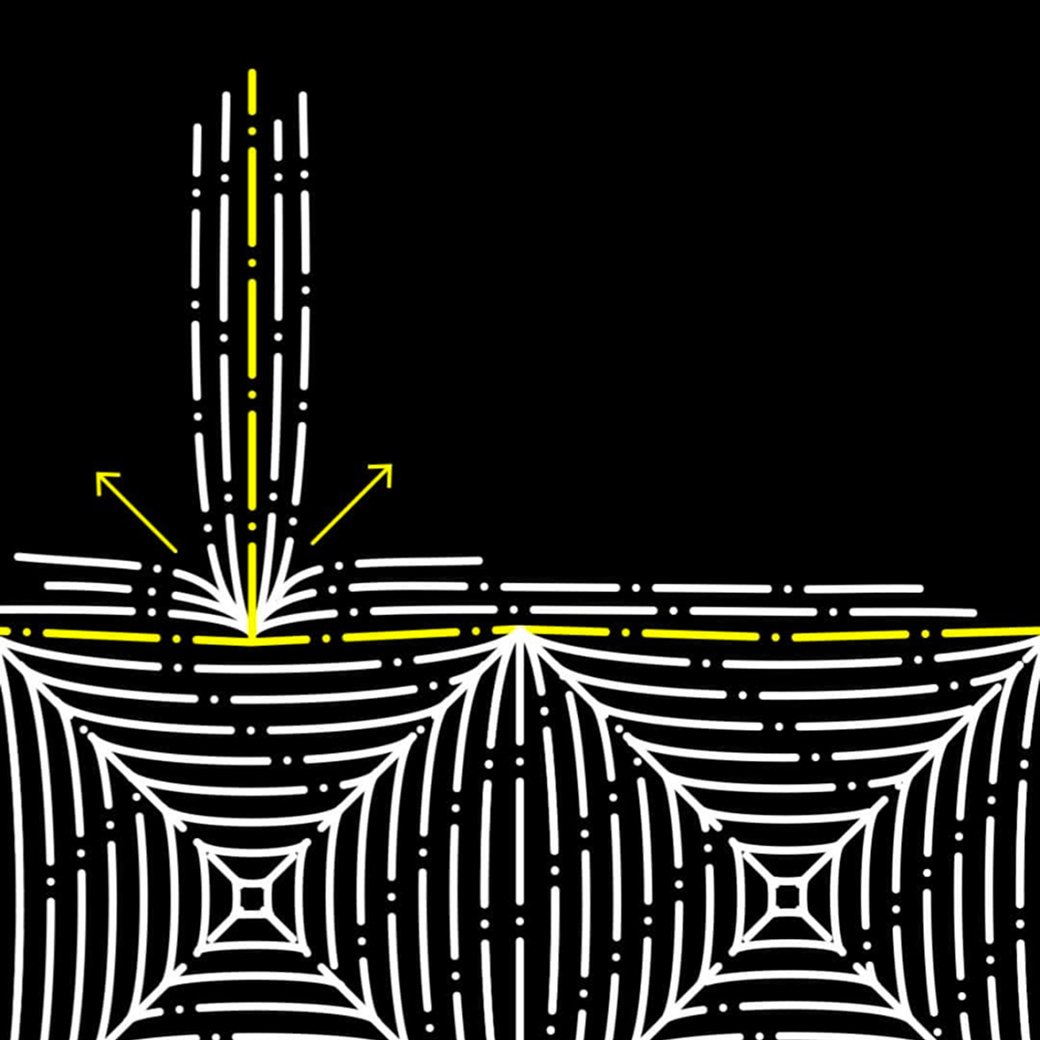
When multiple propagations meet, the resulting node can become a new active condition. The process does not stop at the intersection: it can restart and proceed toward regions of the field that are still open.
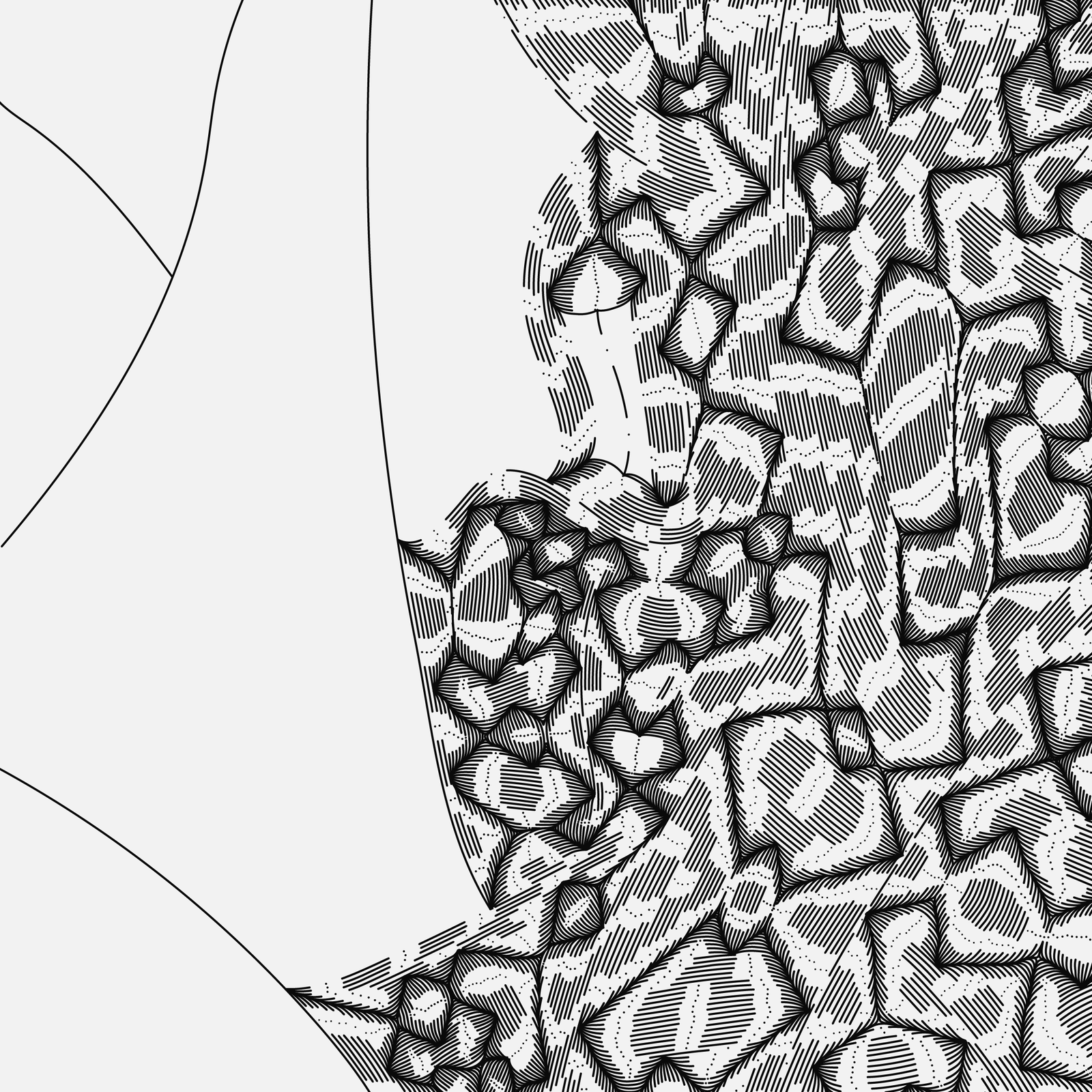
Additionally, new poles can be generated directly along a line, altering the matrix during the internal phase of generation without breaking the coherence of the system. This possibility is not an exception, but an operational property of the method: the internal domain can be redefined while the process is ongoing, generating new closed figures and new operative matrices to be filled.
Saturation does not coincide with simple filling. It is a progressive occupation of the residual space, up to a condition of closure.
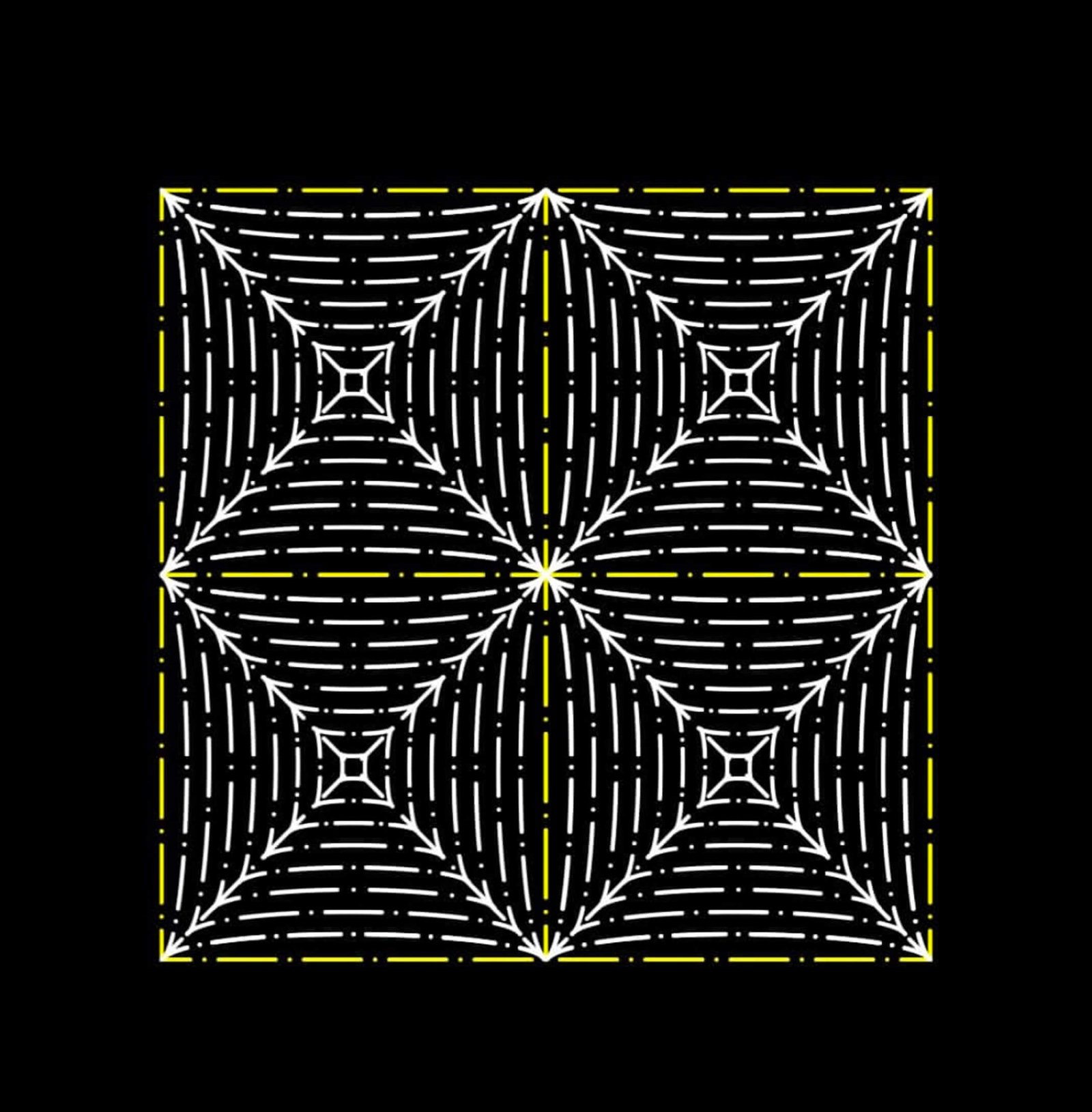
When it appears, the center is not a predefined goal but an emergent condition produced by the convergence of lines toward an internal zone of equilibrium. In regular figures, this condition tends to be more evident, as the field finds a more stable equilibrium in the geometric center.
SIGN VARIABILITY
An essential part of the method lies in its manual nature.
Minimal variations in curvature, pressure, spacing, or continuity of the stroke are not treated as errors to be corrected, but as integrated components of the structure.
The system does not require mechanical perfection. It requires coherence of process.
Precision does not coincide with rigidity: it coincides with the ability to absorb local deviations without losing structure and coherence with previously drawn lines.
VISUAL MORPHOGENESIS
The form is not designed as a final image to be filled, but takes shape over time through the repetition of a simple rule capable of generating increasing complexity.
In this sense, structure emerges progressively from the interaction between lines that propagate, meet, and redefine the field. Organization is not imposed by global control, but arises from local relations, collisions, thresholds, reignitions, and successive saturations.
The field of lines generated by the method can be read, in a descriptive sense, as an implicit scalar field that grows progressively from the exterior toward the interior of the figure. The lines that emerge during the process can therefore be interpreted as successive levels of this field, determined by the interaction between concurrent fronts.
The final figure is not the starting point of the work, but the visible outcome of a formation process.
The reference to morphogenesis does not imply a biological or natural simulation in a strict sense. It serves to clarify that, in the method, visual space organizes itself gradually from simple initial conditions.
The final figure is the outcome of a process, not its starting point.
PROPAGATION AND STRUCTURE
Voronoi, fronts, and domains of influence
Re-gramma operates as a propagation system between competing sides.
In this sense, domains of influence recall the logic of Voronoi: not because the method reduces to a final partition of space, but because each front defines its domain in relation to neighboring fronts.
The key difference is that Voronoi makes the distribution of influences and boundaries readable, while here the internal organization of the generated field also becomes visible. The center, as previously noted, is not assumed as an initial condition but may emerge from the interference between converging propagations.
The behavior of the method also shows affinities with wavefront propagation or grassfire logic: successive fronts advance through space until they meet. Distance here does not appear as an abstract quantity, but as a process of advancement, accumulation, and collision.
Medial axis and emergent structure
In some configurations, the progressive saturation of the field produces an internal structure that can be read in relation to the medial axis of the figure.
This behavior can be related, by analogy, to the grassfire transform, a geometric model used to describe the simultaneous propagation of fronts from the boundaries of a figure. When these fronts meet, they generate an internal structure corresponding to the medial axis.
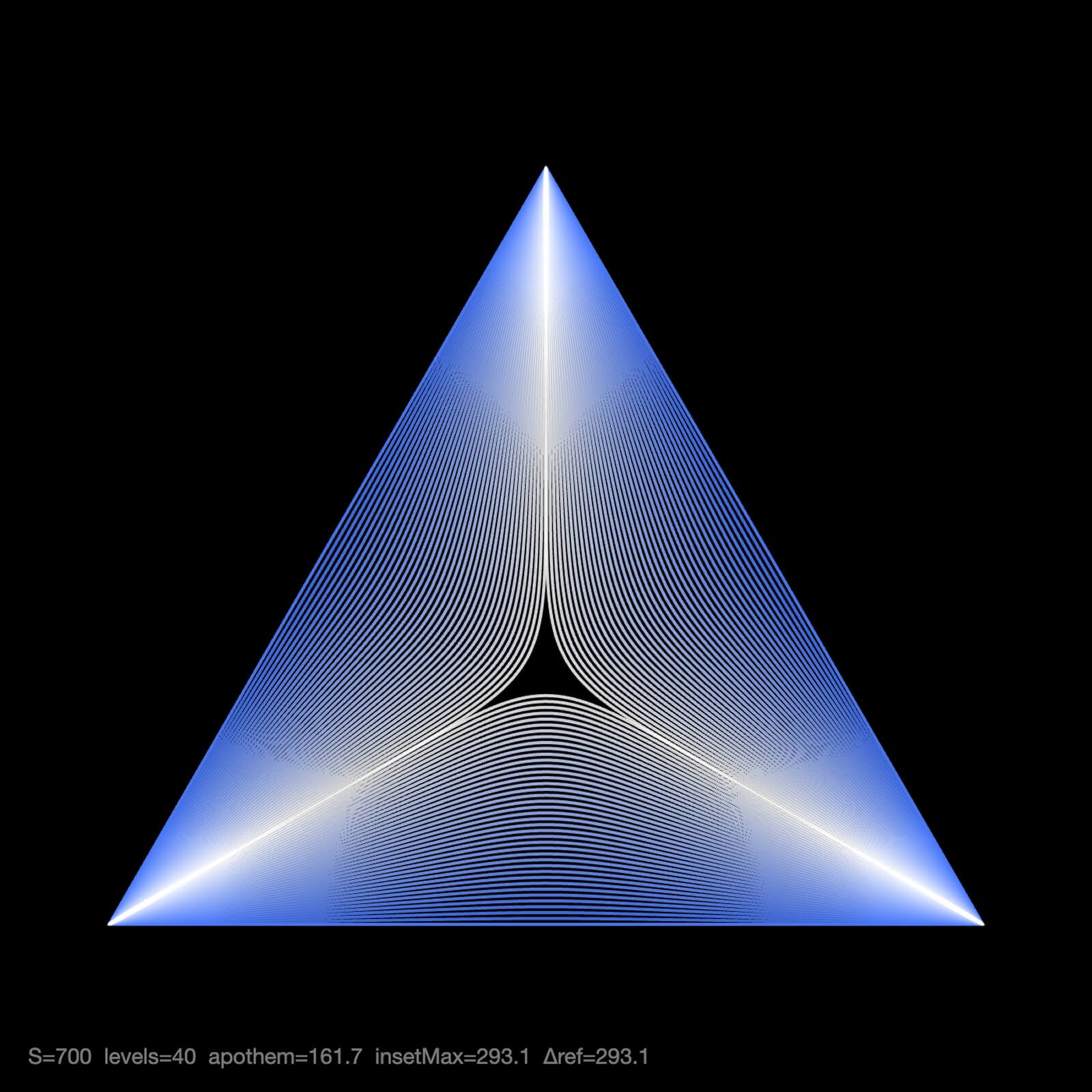
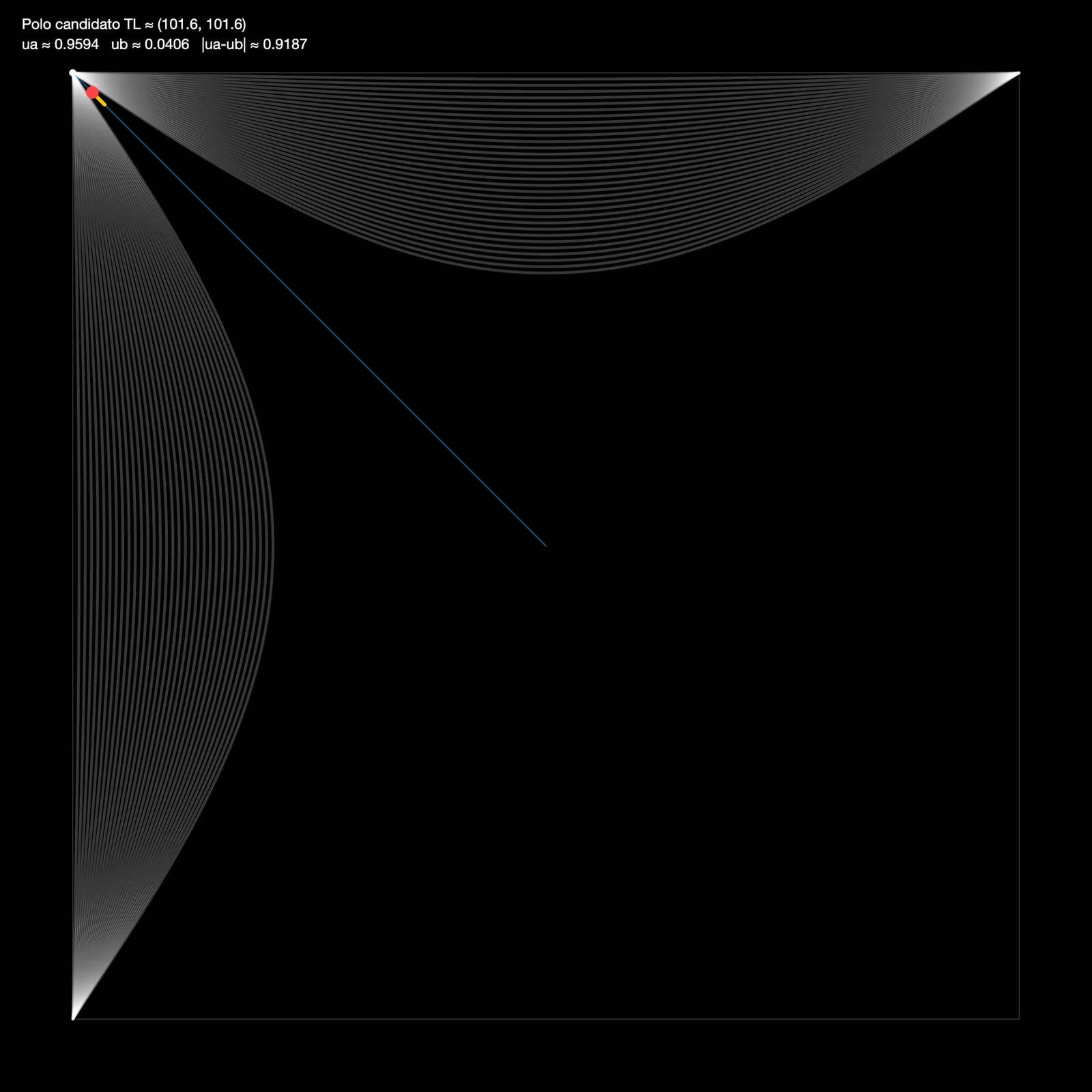
In Re-gramma, something similar occurs on a graphical level: lines propagate from the sides or poles of the figure and, through their encounters, produce nodes and internal thresholds that make a central structure visible.
The difference from classical geometric models lies in the procedure: here mediality is not analytically extracted, but emerges as a result of propagation, encounter, and closure.
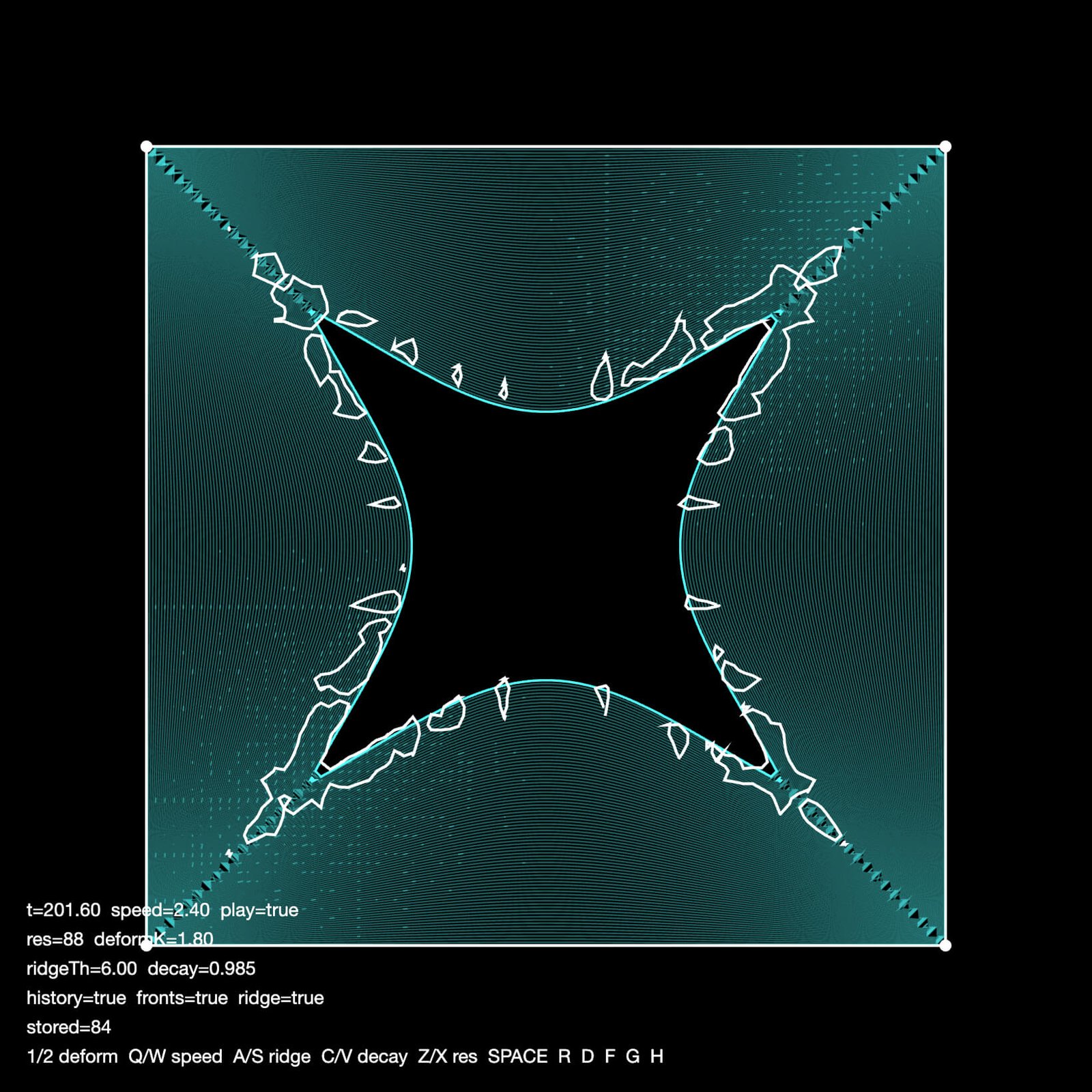
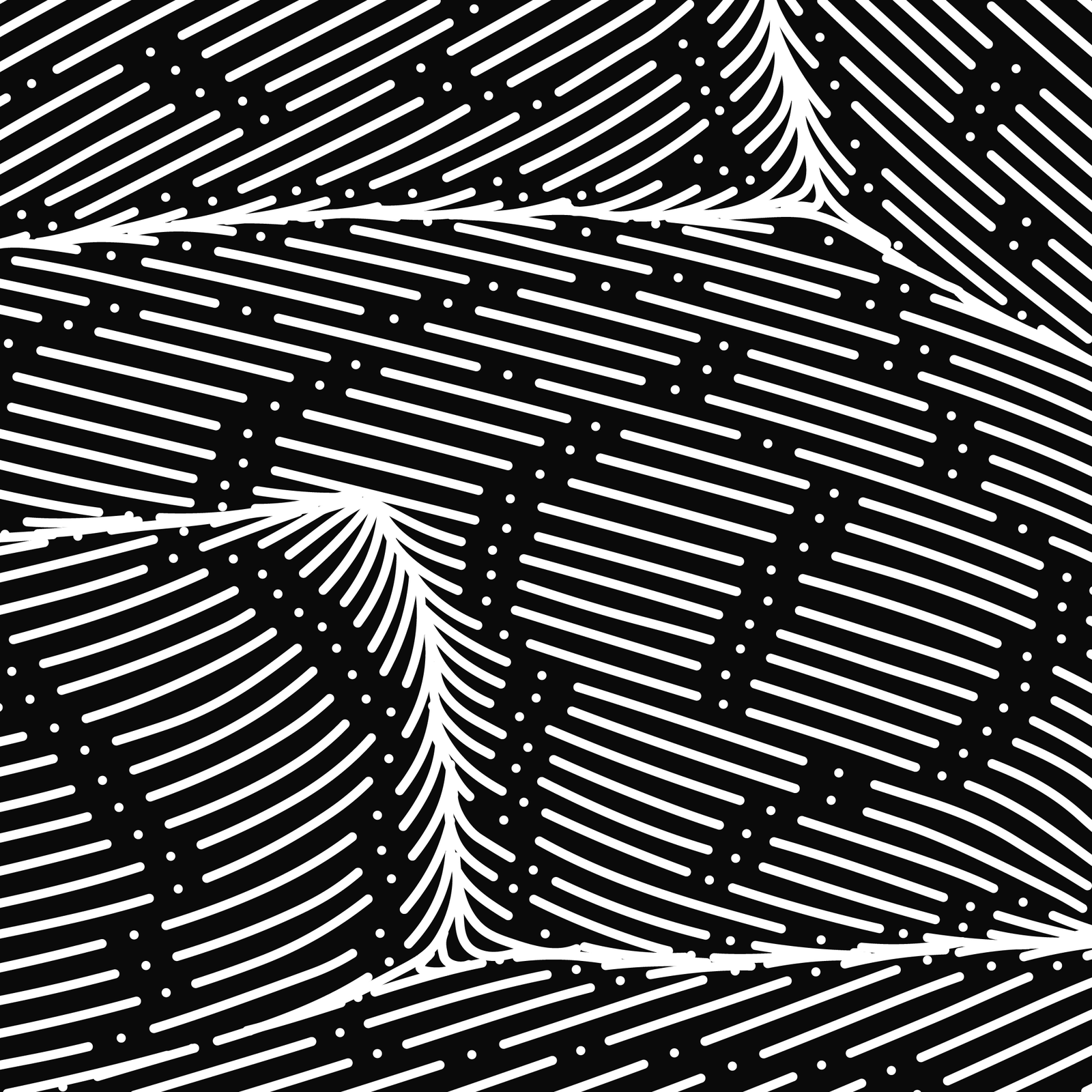
When fronts from different poles balance each other, internal thresholds, ridges, and junctions are formed. These zones are not decorative residues, but structural outcomes of the process.
This structure does not necessarily coincide with the canonical Euclidean medial axis, but can be understood as a form of emergent mediality or process-based skeleton.
GEOMETRIC RESONANCES
Over time, a visual correspondence has been recognized between the method and certain families of curves known in geometry.
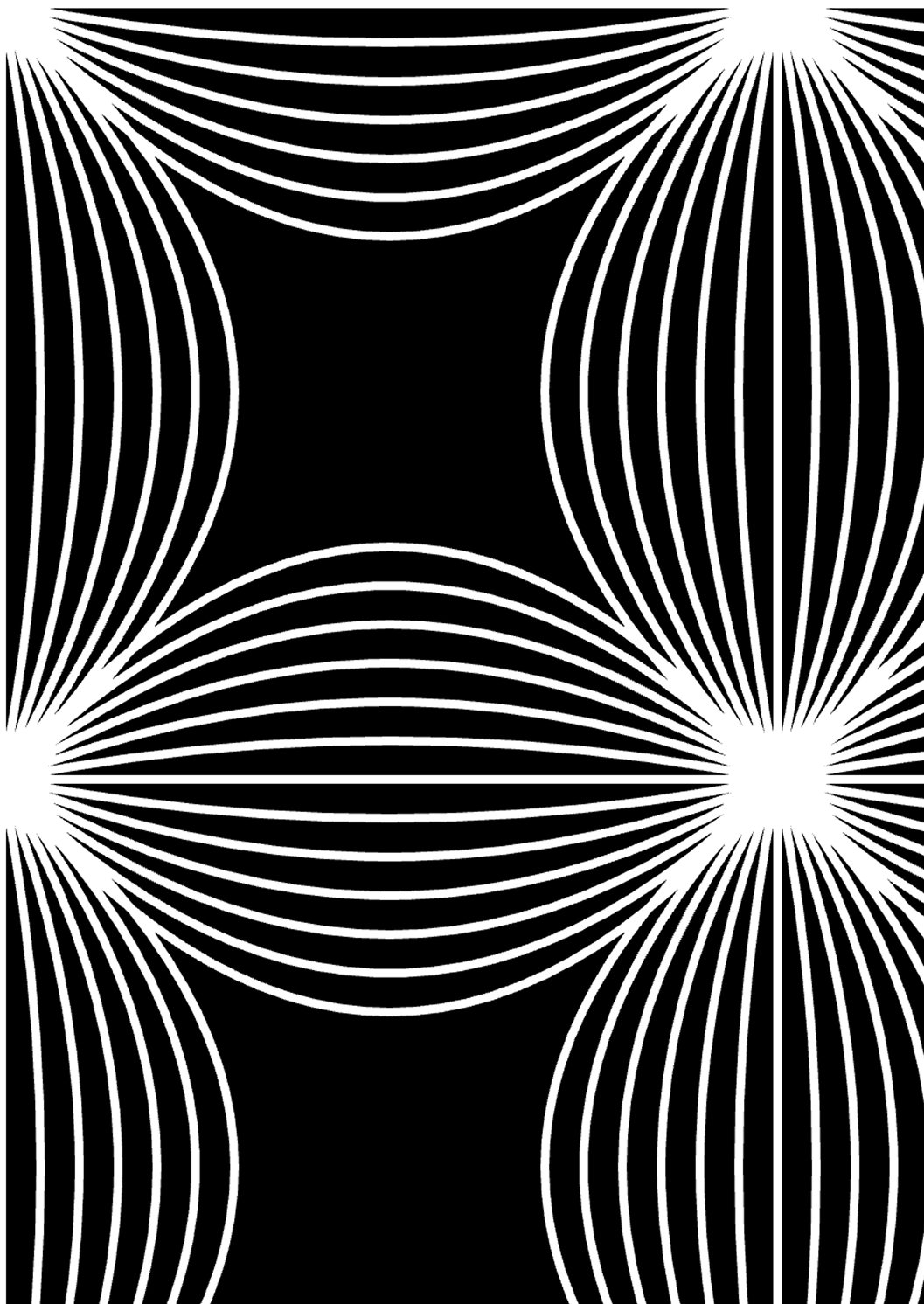
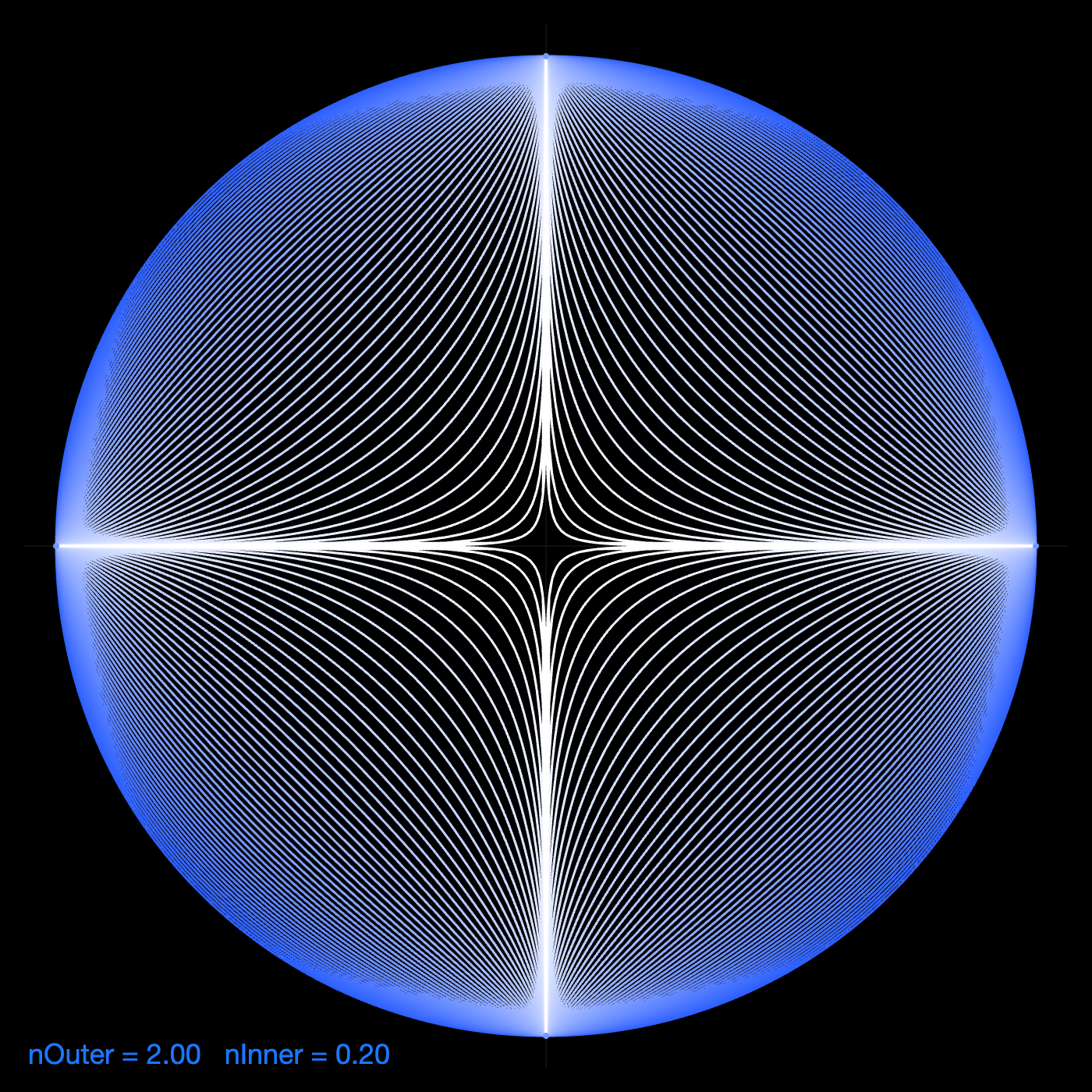
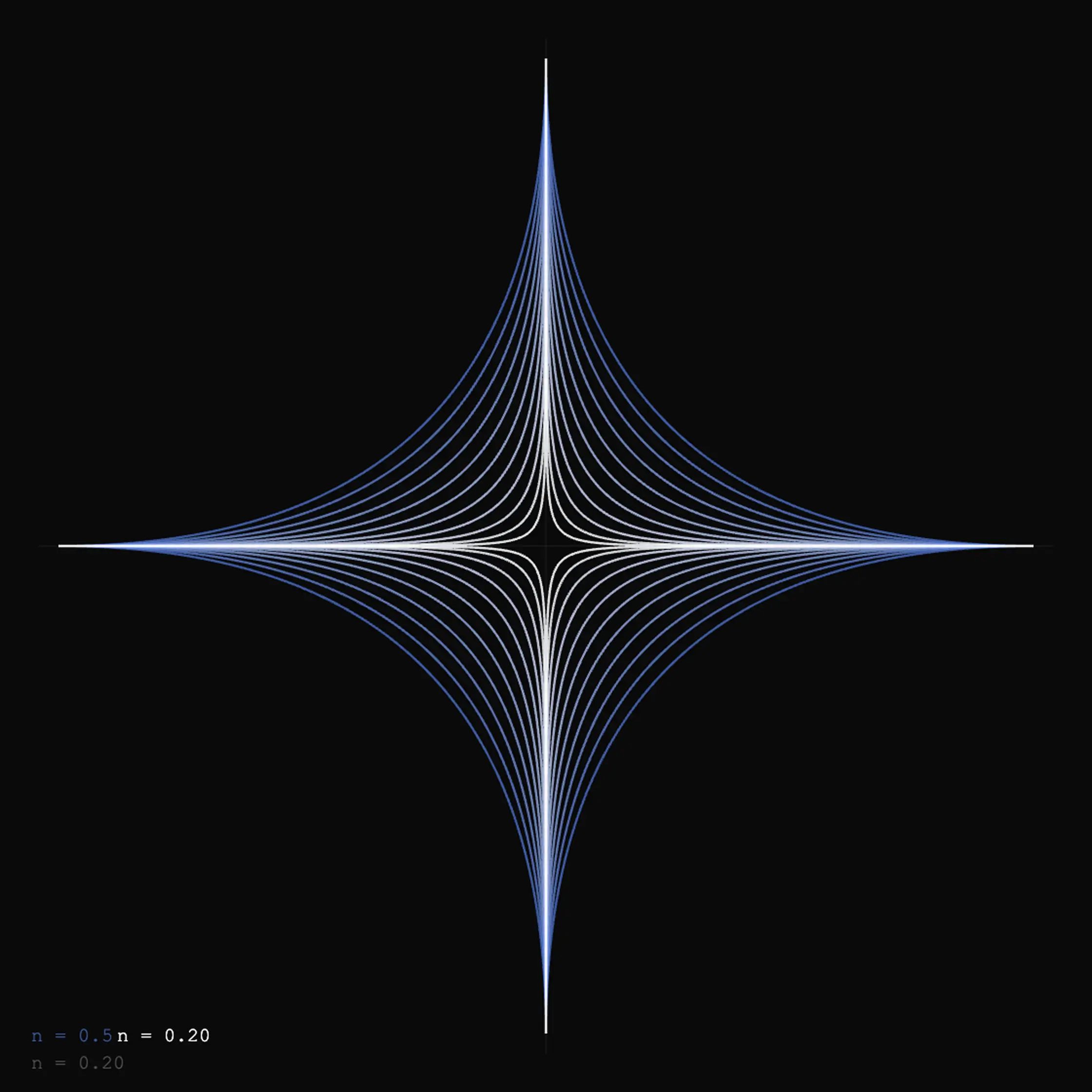
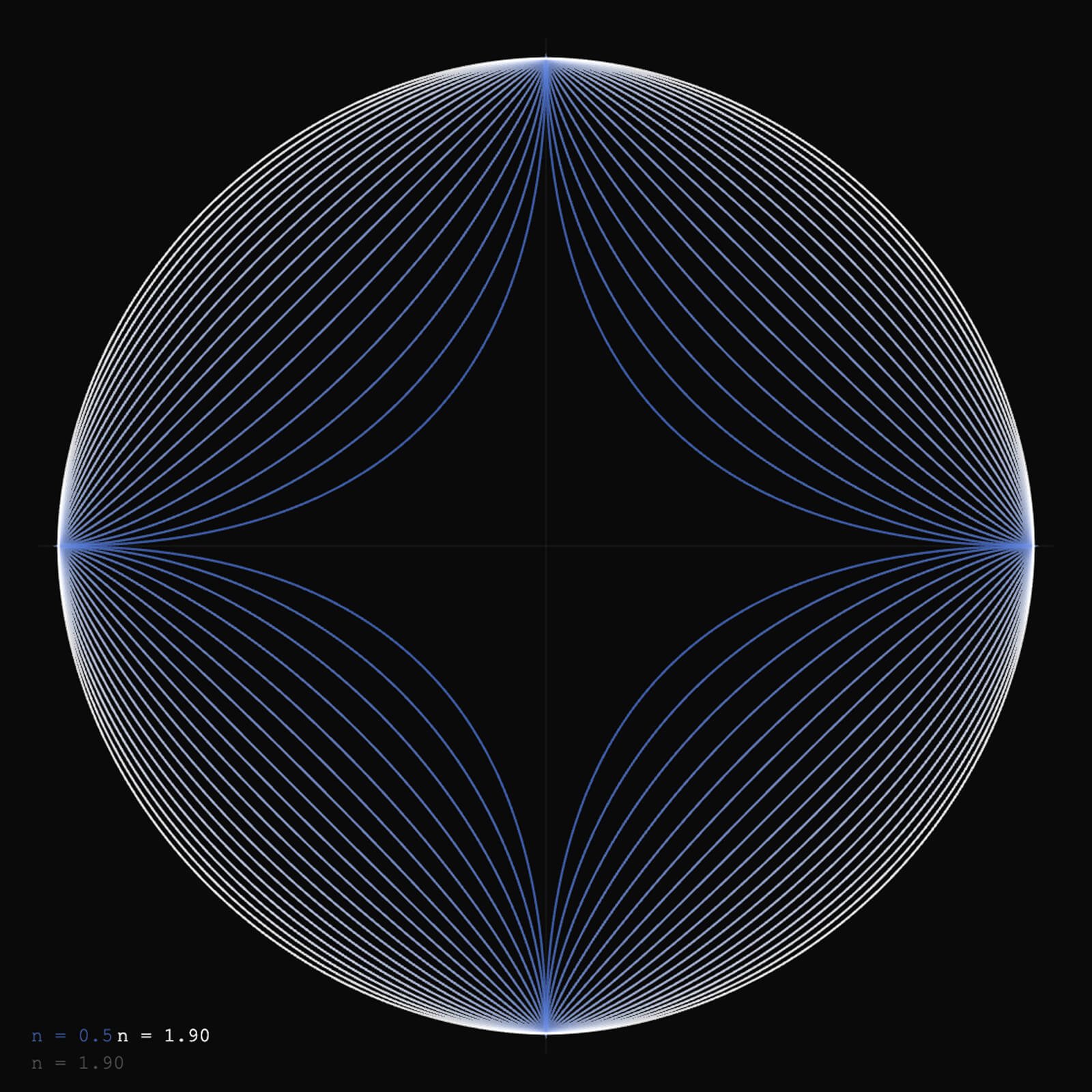
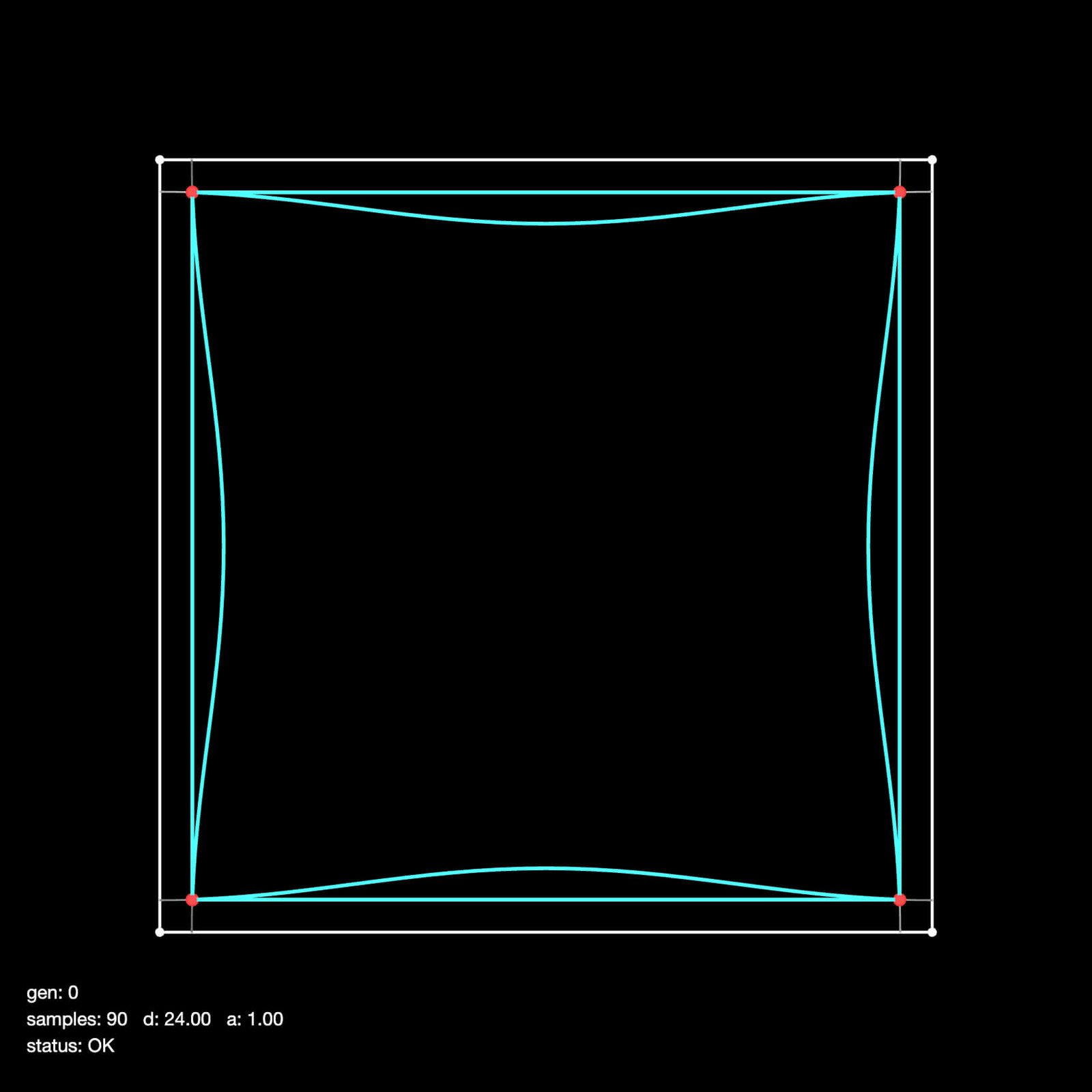
The primary reference is Gabriel Lamé, particularly in terms of morphological affinity. The superellipses he described show a formal quality close to many curves generated by the method.
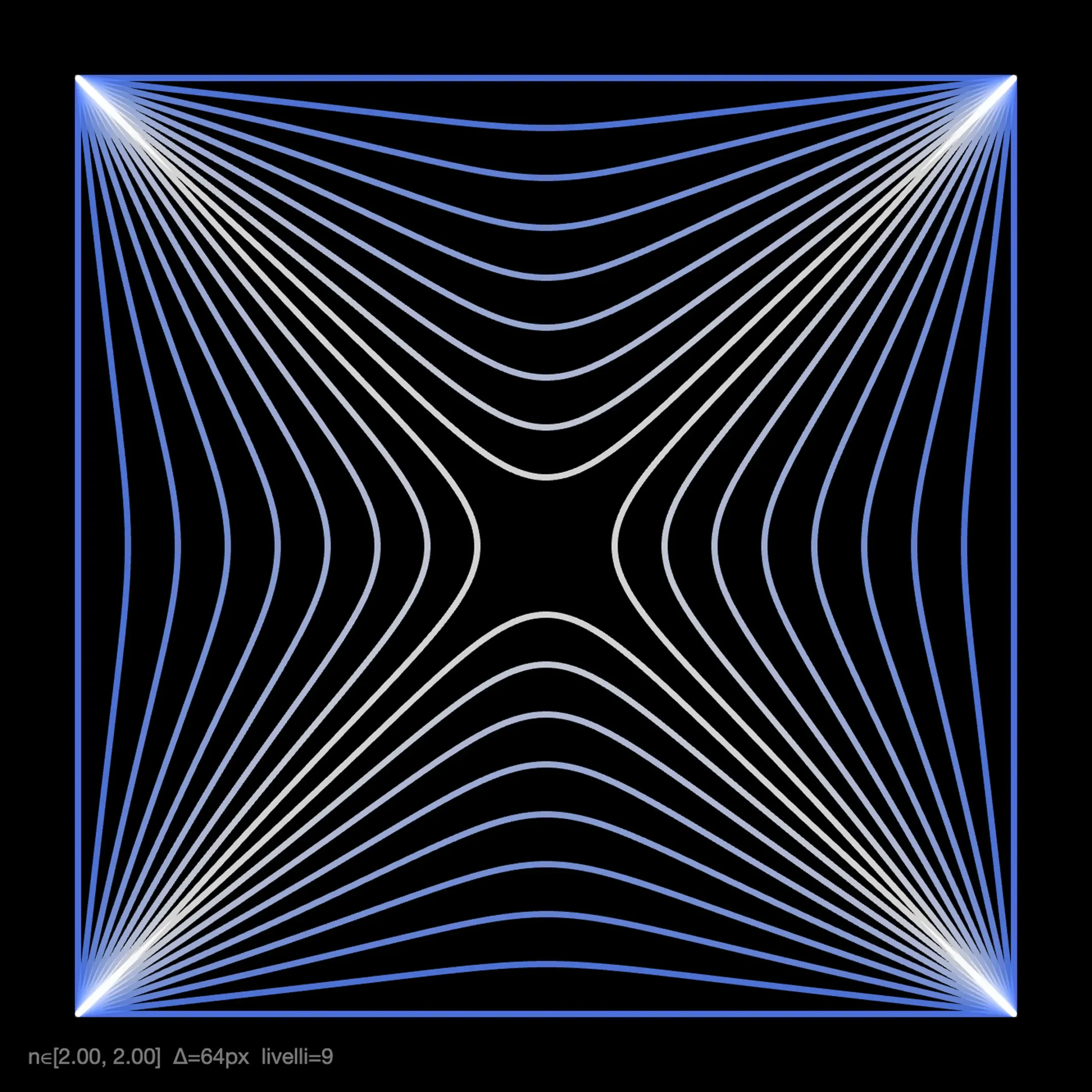
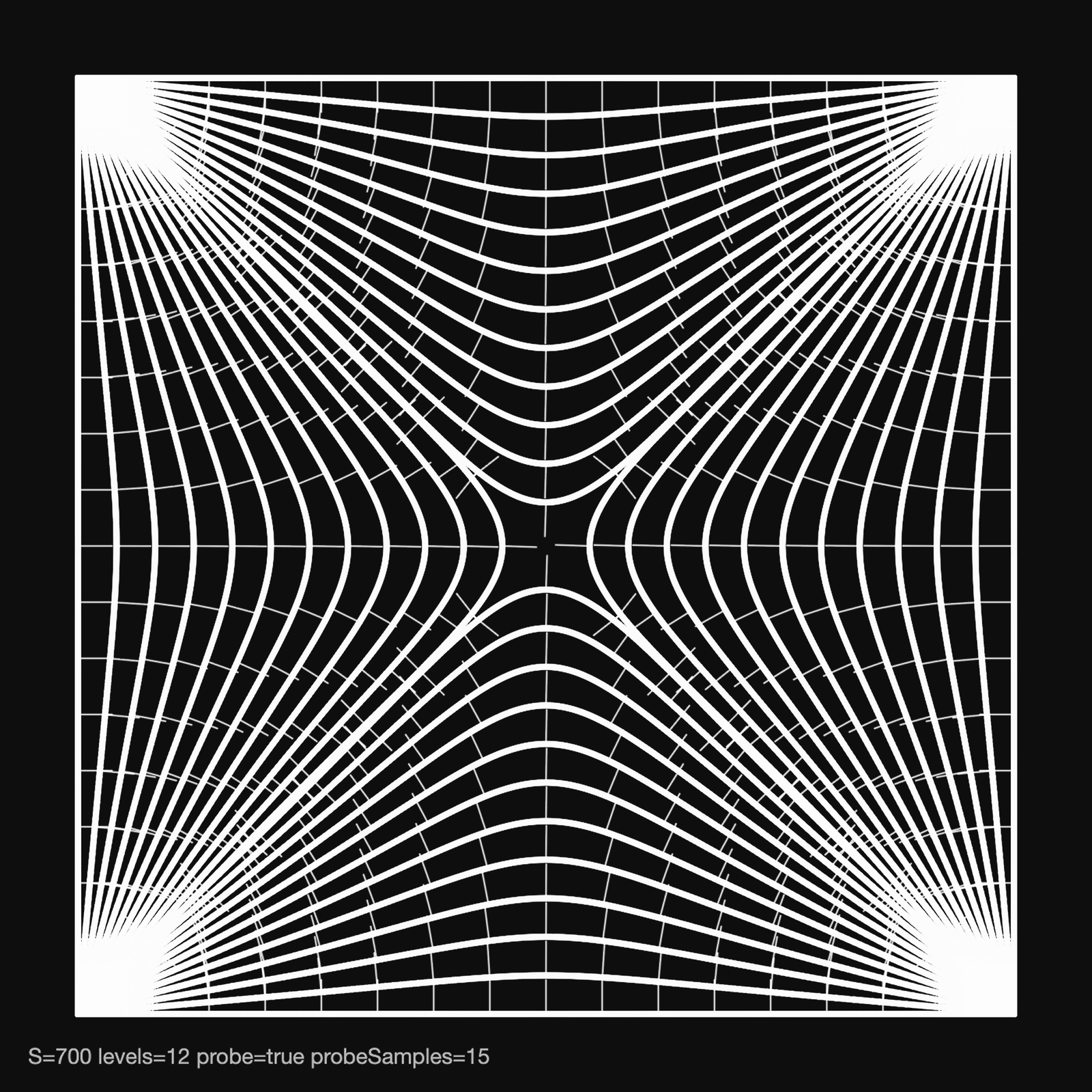
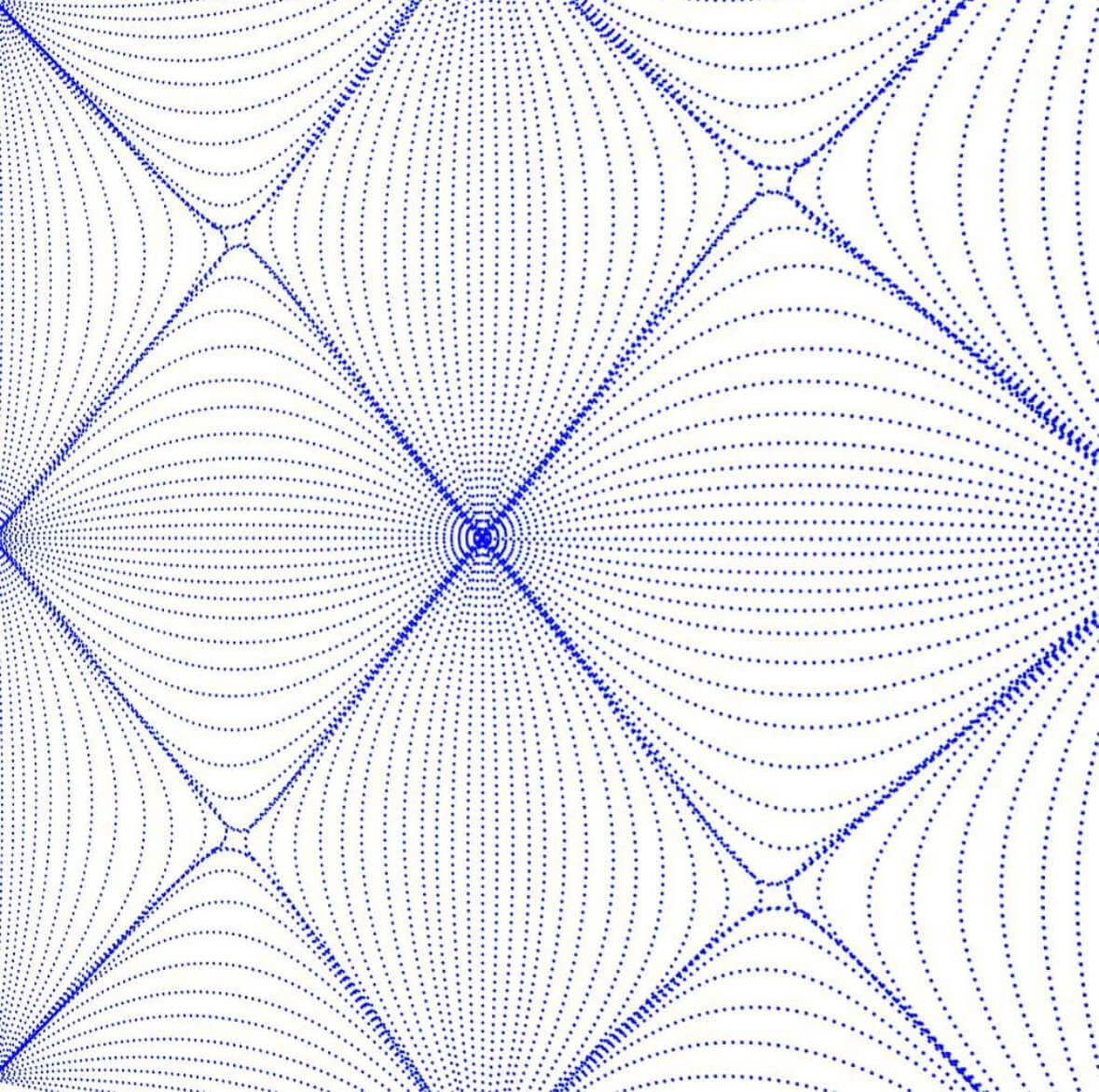
The reference to Minkowski is, in some cases, more direct at the level of morphological reading. In the square filled by the method, curves emerge that can be interpreted in relation to Minkowskian configurations. The difference is that in Minkowskian space lines can extend infinitely, while in Re-gramma they remain constrained within the geometric figure, bounded by its domain and oriented by its poles or intersections.
The method does not construct the field as a uniform Cartesian or Minkowskian metric. The families of lines are generated within the figure through propagation and interference, while their number, density, thickness, and graphical quality remain open operational variables.
Lamé and Minkowski are therefore not applied models, but references used to describe real morphological similarities observed in the study of the process.
IMPLICIT PROJECTIONS AND EMERGENT STRUCTURES
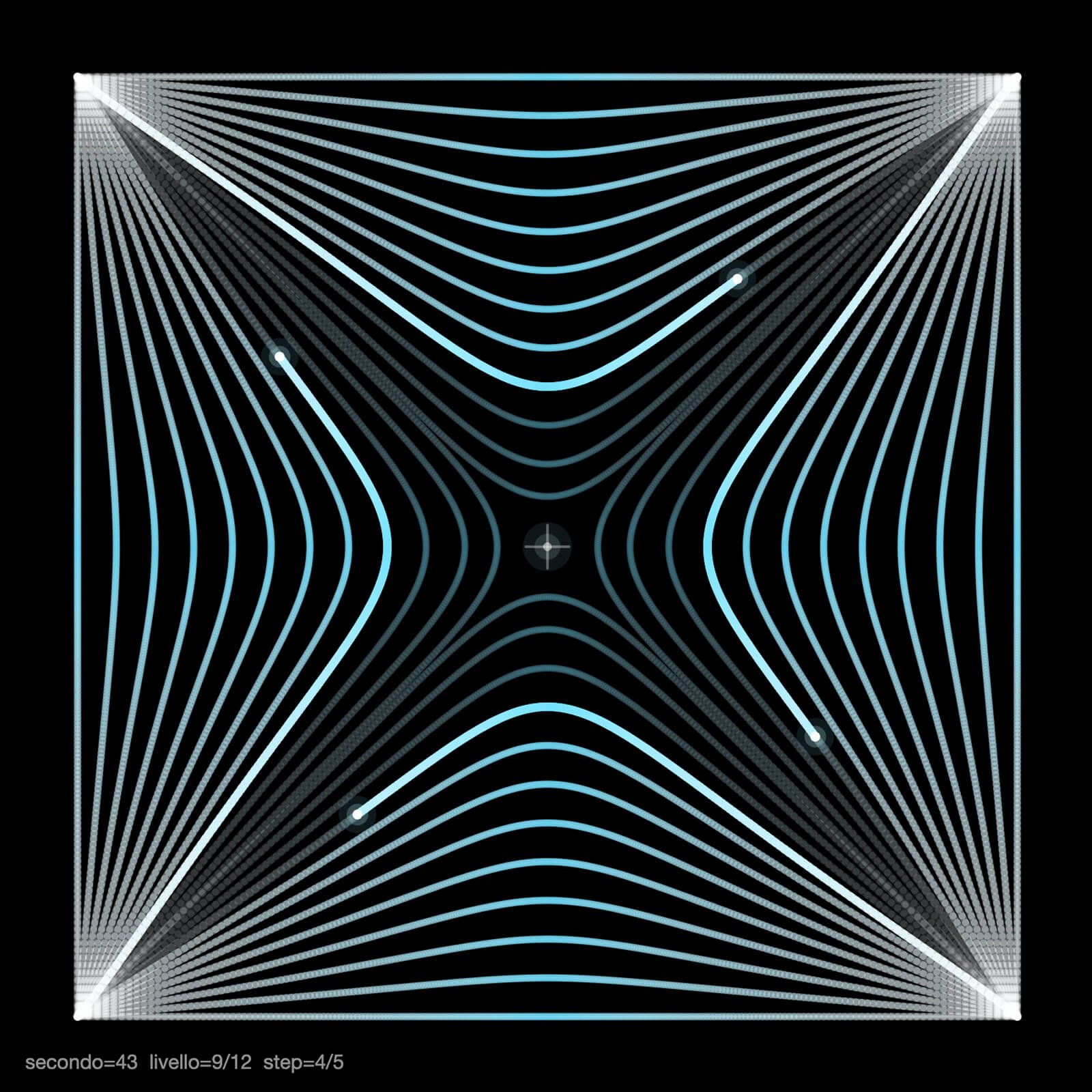
In some configurations, the central figure assumes a curvilinear deformation that may visually recall hyperbolic configurations. This analogy remains descriptive: the method operates entirely in the Euclidean plane.
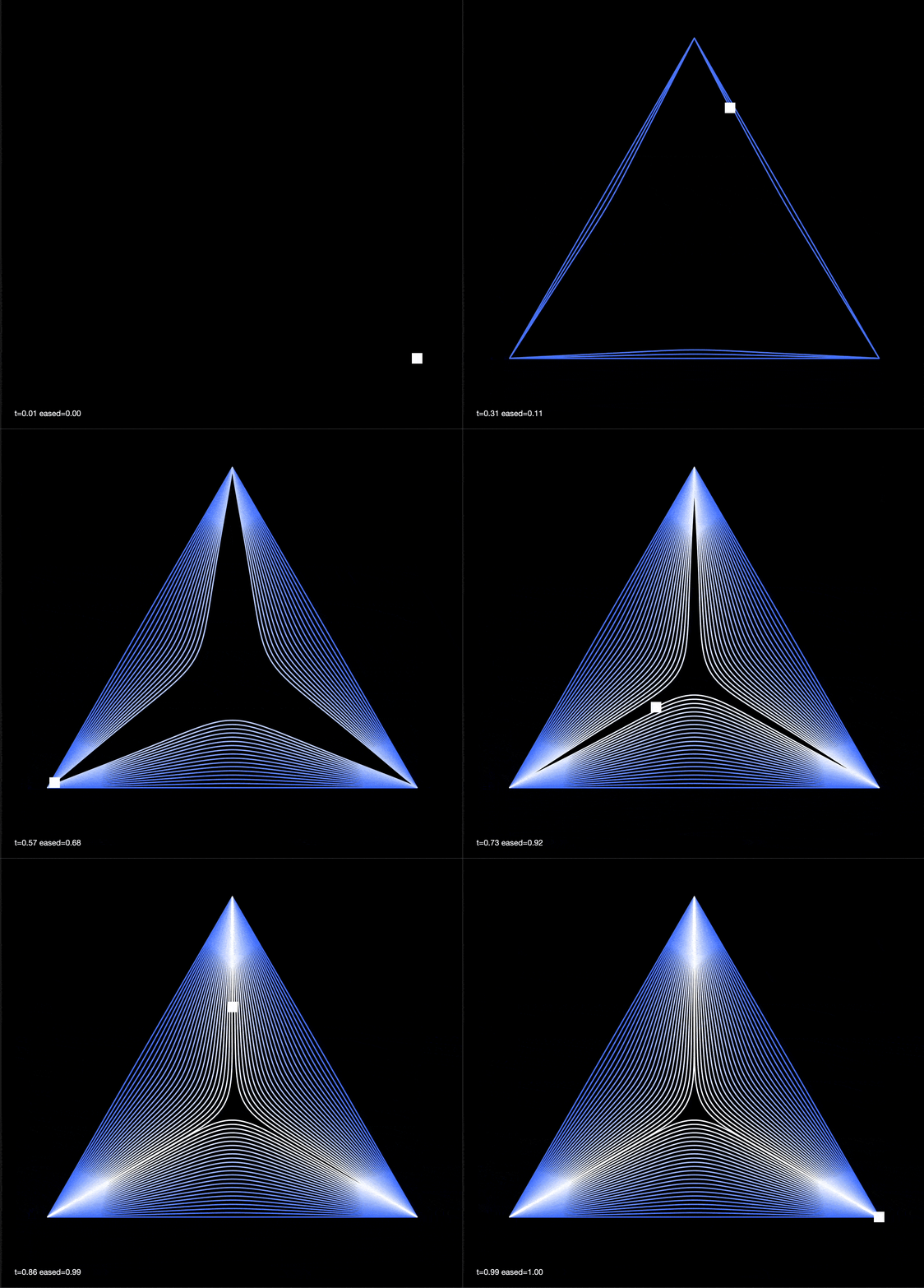
In regular figures, the generated field makes visible a more complex implicit spatial structure. In the case of the square, the convergence of lines toward the center produces a configuration that recalls a pyramidal structure: not because the method constructs a three-dimensional object, but because the behavior of the field makes visible a spatial tension oriented toward a central apex.
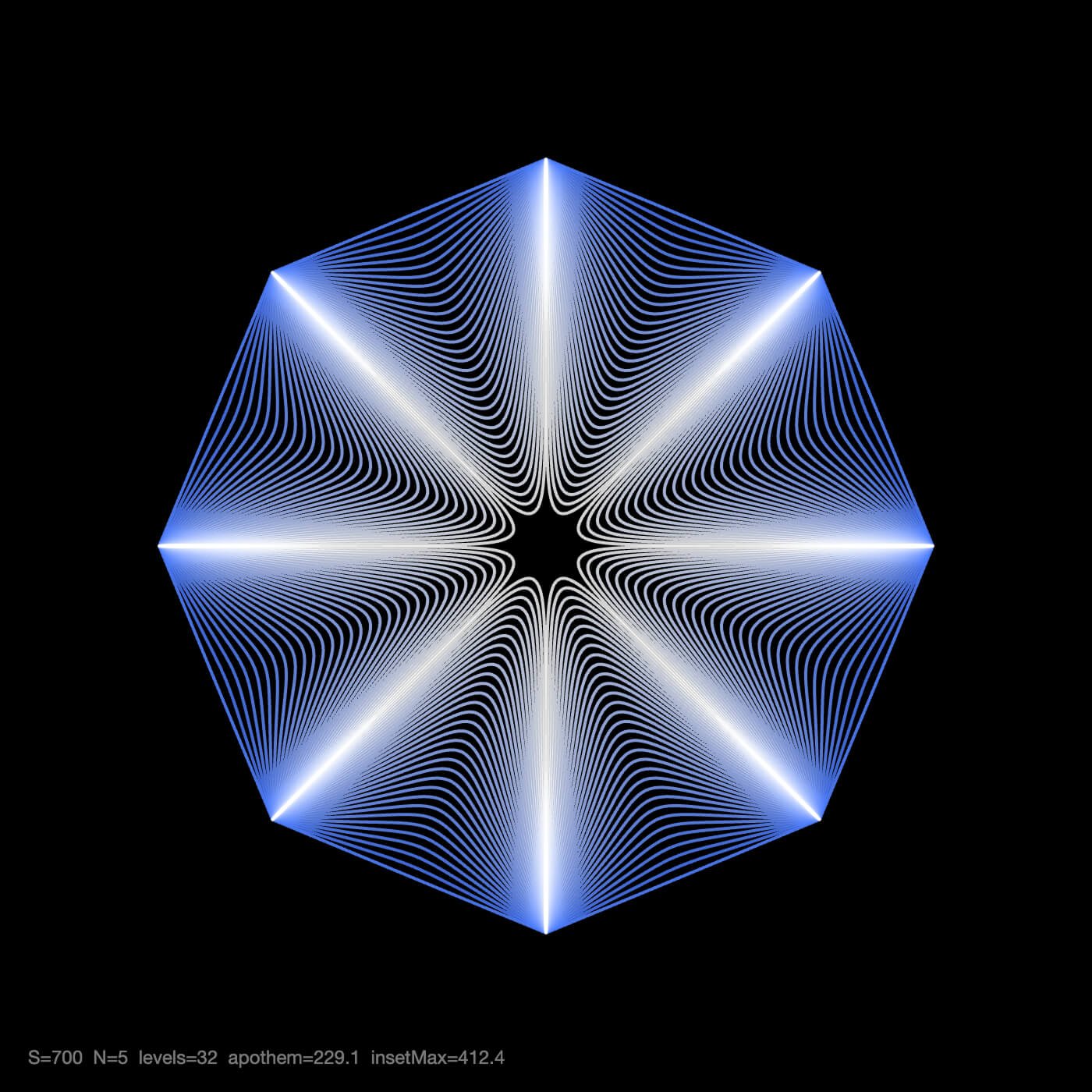
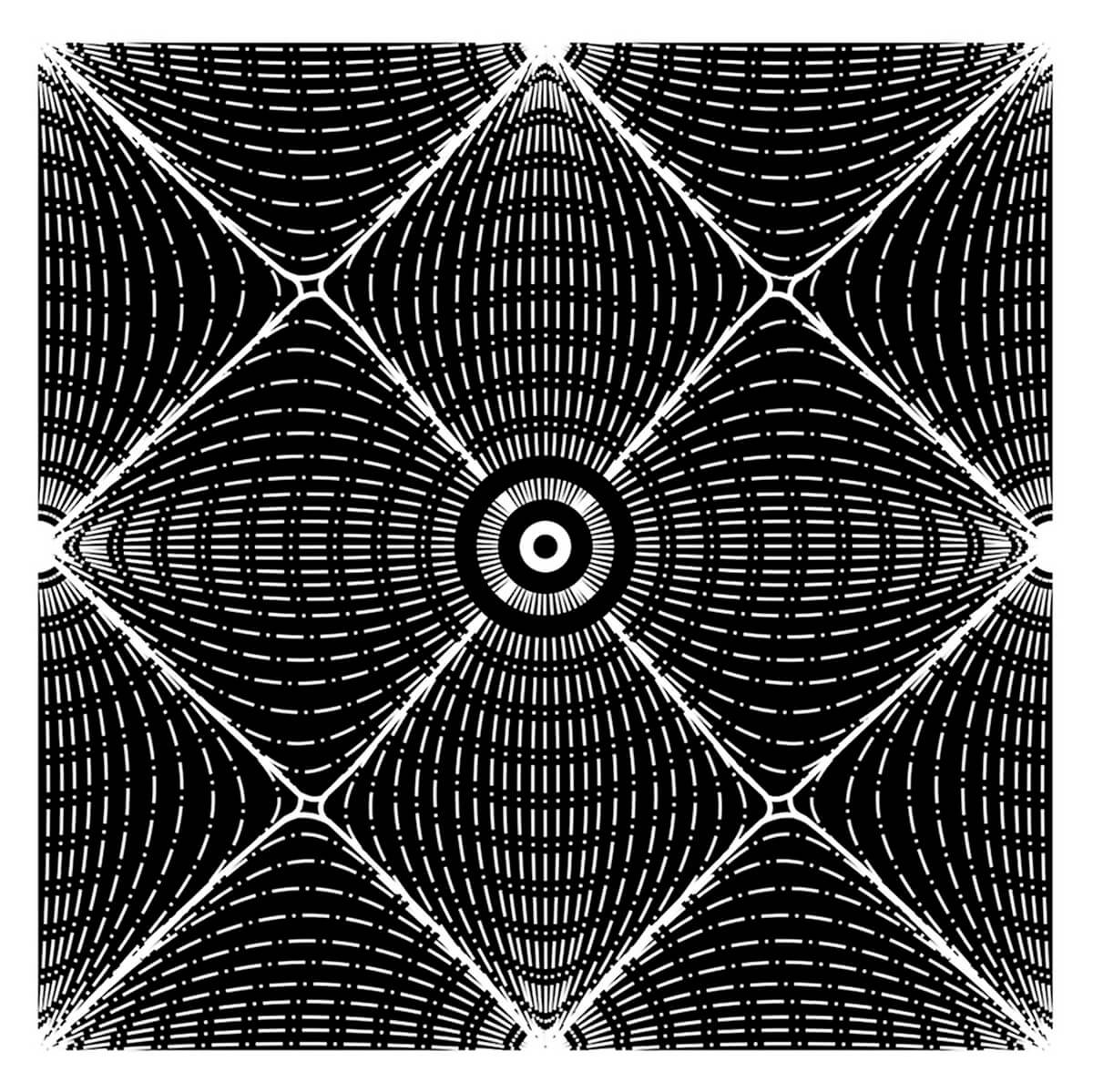
The same principle applies to other regular figures. The triangle suggests tetrahedral configurations. Polygons with more sides produce more articulated radial structures. The internal structure inherits directly the symmetry of the initial domain.
This relationship is morphological, not literal.
Re-gramma operates entirely in the plane, but in certain conditions the behavior of the lines reveals spatial relations that can be read as implicit projections of three-dimensional forms.
RESONANCES WITH TRADITIONAL GEOMETRIES
Some configurations generated by the method show visual affinities with traditional geometric patterns, such as Japanese woodwork (kumiko), particularly triangular networks like asa-no-ha.
The similarity is morphological. In both cases, configurations emerge based on local triangulations and balanced linear tensions.
The difference is fundamental: traditional patterns are constructed through predefined modular grids, while in Re-gramma such configurations emerge as a result of propagation, collision, and saturation.
These references serve as interpretative tools, not as constructive models.
ADDITIVE MANUFACTURING AND INFILL STRUCTURES
The logic of the method suggests a possible conceptual extension in additive manufacturing.
In 3D printing, objects are not fully filled, but use internal structures designed to distribute material and ensure stability.
Common infills include grids, triangles, hexagons, cubic, gyroid, and concentric patterns. Each defines a different operational grammar.
Re-gramma relates to this field because it also constructs internal space through an iterative rule within a defined domain. The difference lies in behavior: instead of repetition or offset, structure emerges through propagation, interaction, and saturation.
COMPARISON WITH CONCENTRIC INFILL
Concentric infill generates successive offsets of the perimeter.
In Re-gramma, lines do not derive from boundary contraction, but from propagation activated by poles or sides, interacting through contact and collision.
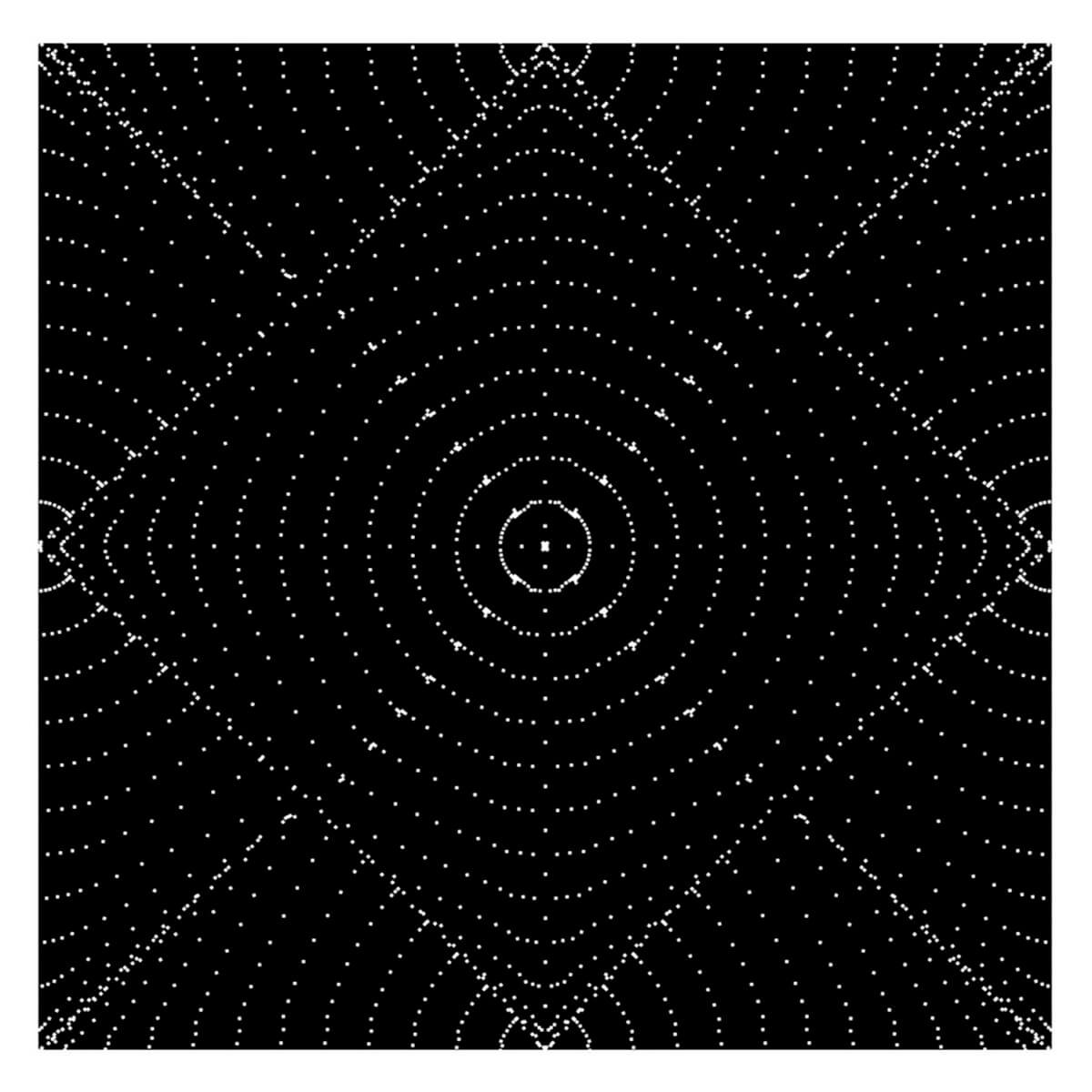
The resemblance can be visual, especially in saturated regular figures, but remains morphological. The underlying process is different.
This distinction is both theoretical and practical: it suggests that Re-gramma could be studied as a potential adaptive infill grammar, although this remains a conceptual extension requiring validation.
COMPUTATIONAL FORMALIZATION
Some aspects of the process are already testable in regular geometries, but full formalization remains an open research direction.
The algorithm does not replace the method. It is a tool to test behaviors, limits, and potentials.
At present, computational translation captures only part of the method. Manual reignition and dynamic domain redefinition are not yet fully replicated.
The method remains open, processual, and variable. Computational research acts as an extension and verification tool.
FINAL CONSIDERATIONS
1) Object Relations: Given a matrix, the accumulation of lines progressively dissolves the initial elements (the cells). What becomes readable is no longer the original scheme, but the relationships and tensions established between the poles.
2) Construction through Accumulation: Space is not given, but constructed. From an empty plane, a complex surface develops through the repeated and patient application of a simple rule. The field is defined through continuity, overlap, and progressive densification of lines.
3) Formation of Space
The method does not describe space, but observes how space forms. It is not a static representation, but the visible trace of a geometric behavior that evolves as it is executed.
4) Integration of Variability
The process accepts the manual nature of execution. Small deviations in curvature or spacing are not corrected as errors, but absorbed into the structure. The system is robust enough to integrate these irregularities, transforming a rigid geometry into a more fluid configuration.
5) Emergent Dynamics
Although it starts from a simple and regular geometric matrix, the outcome is a dynamic configuration. The initial structure progressively recedes, replaced by new directions suggested by the flow of lines. During the process, new lines can be introduced that locally redefine the domain of the figure. In such cases, a new closed configuration is generated, which in turn becomes a new operative matrix to be filled. Each intersection or new line can therefore reactivate the process, allowing the field to continue expanding and transforming.
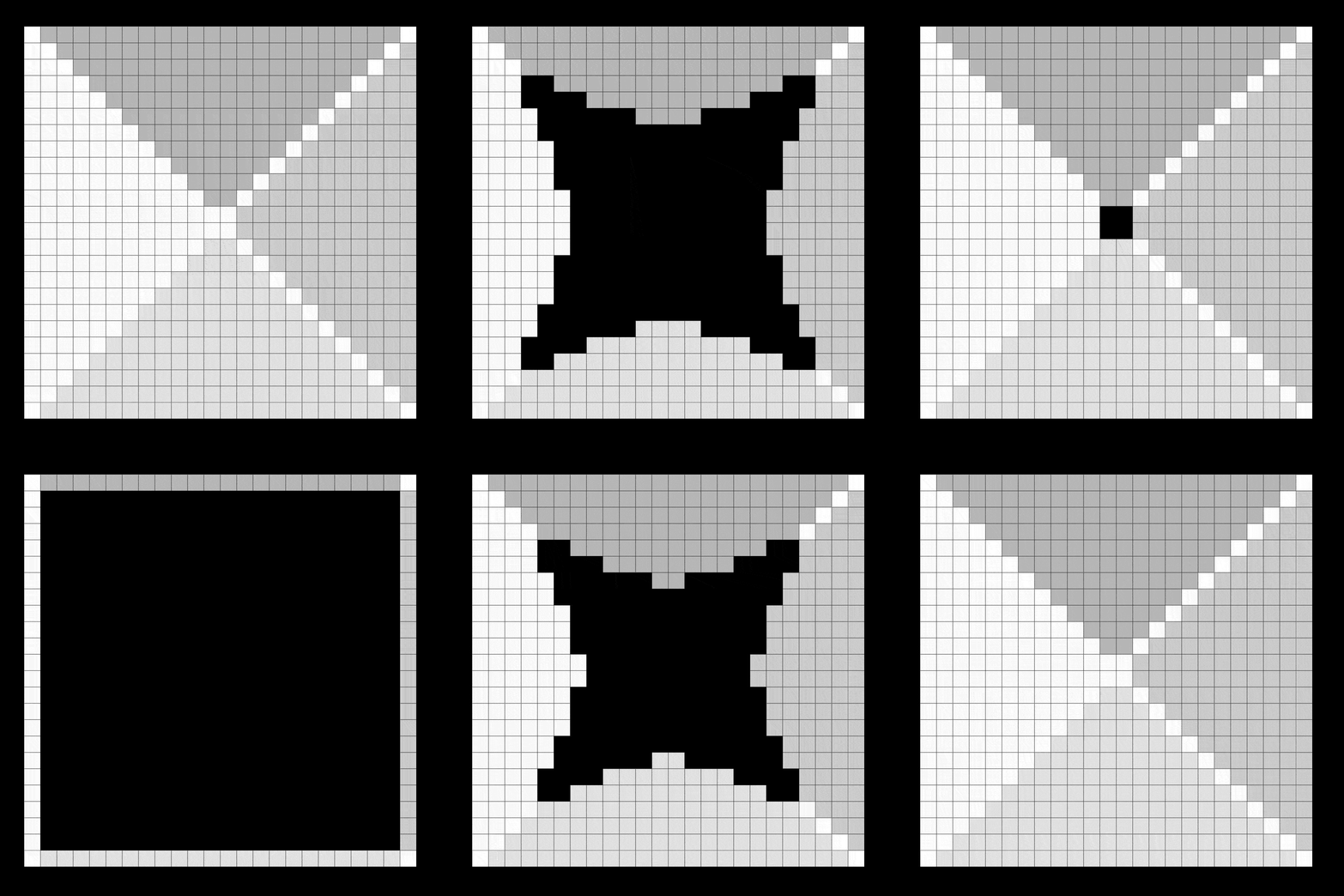
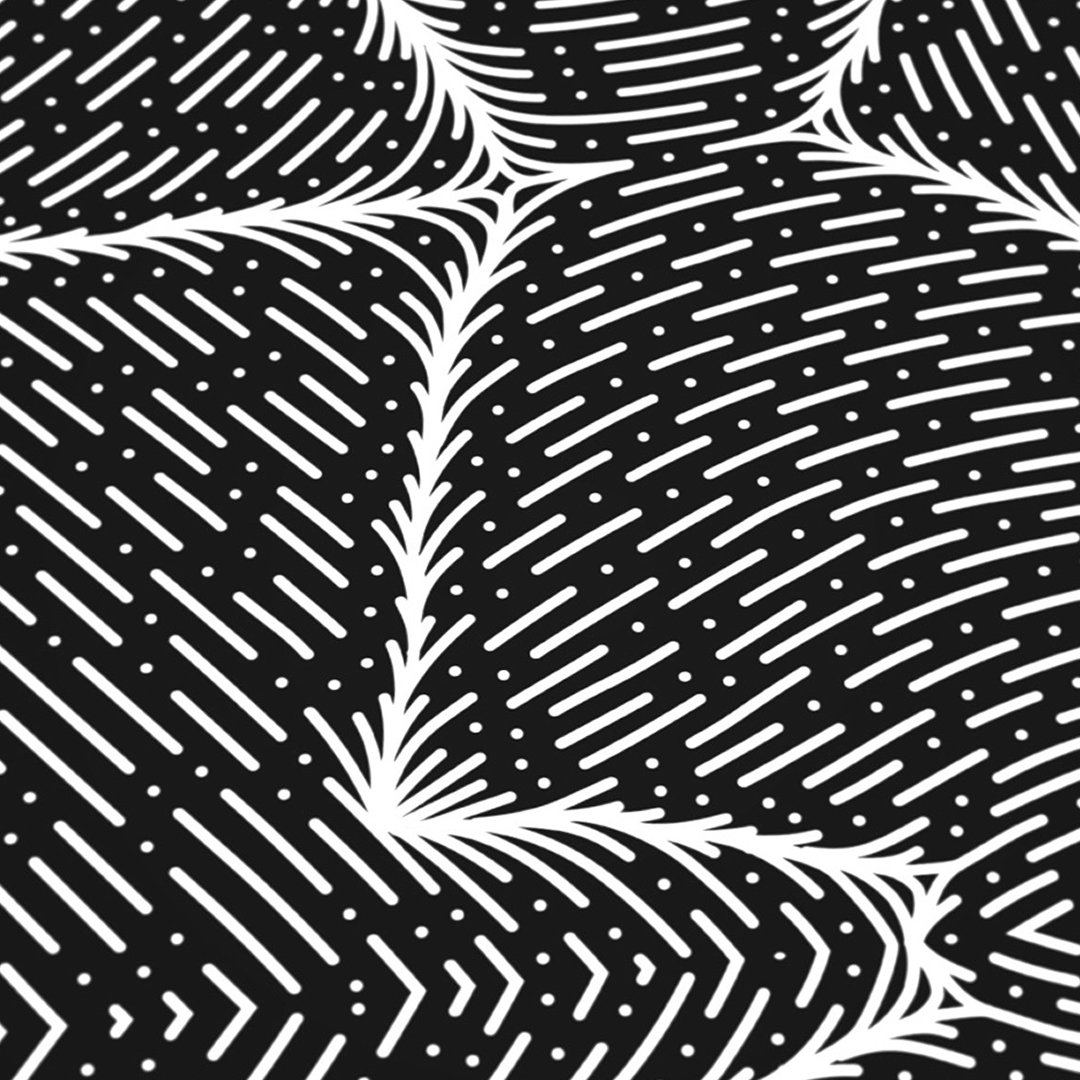
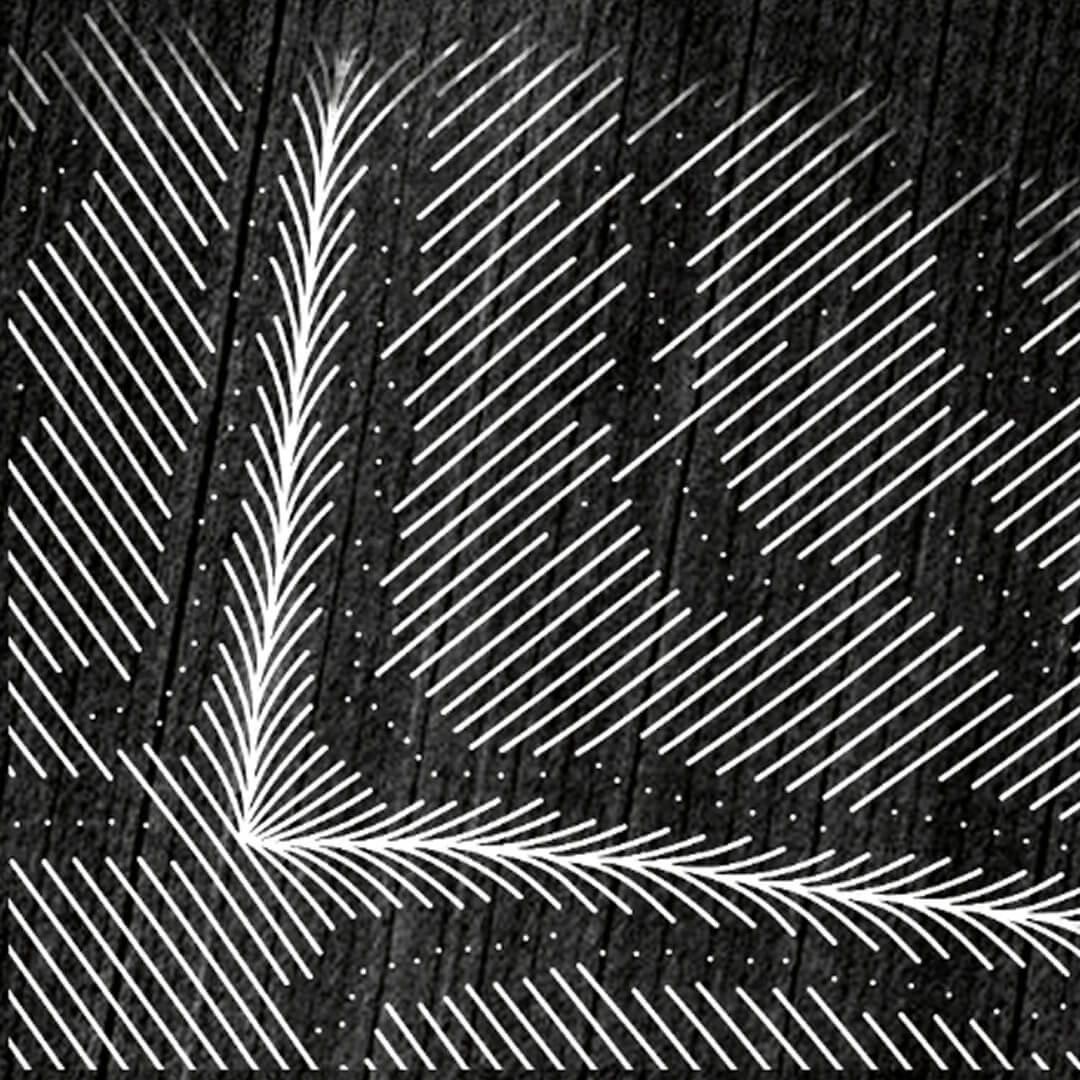
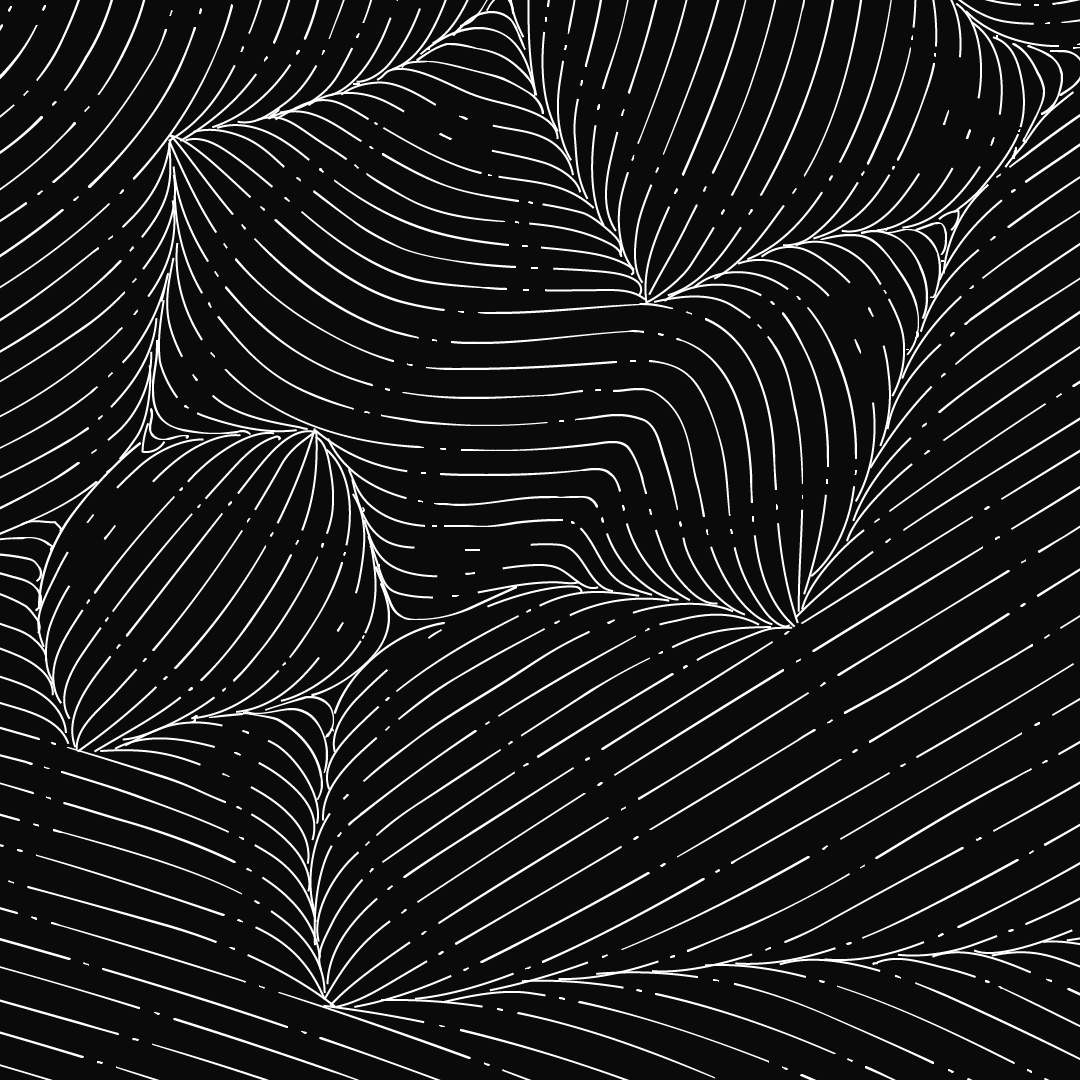
Examples and experiments
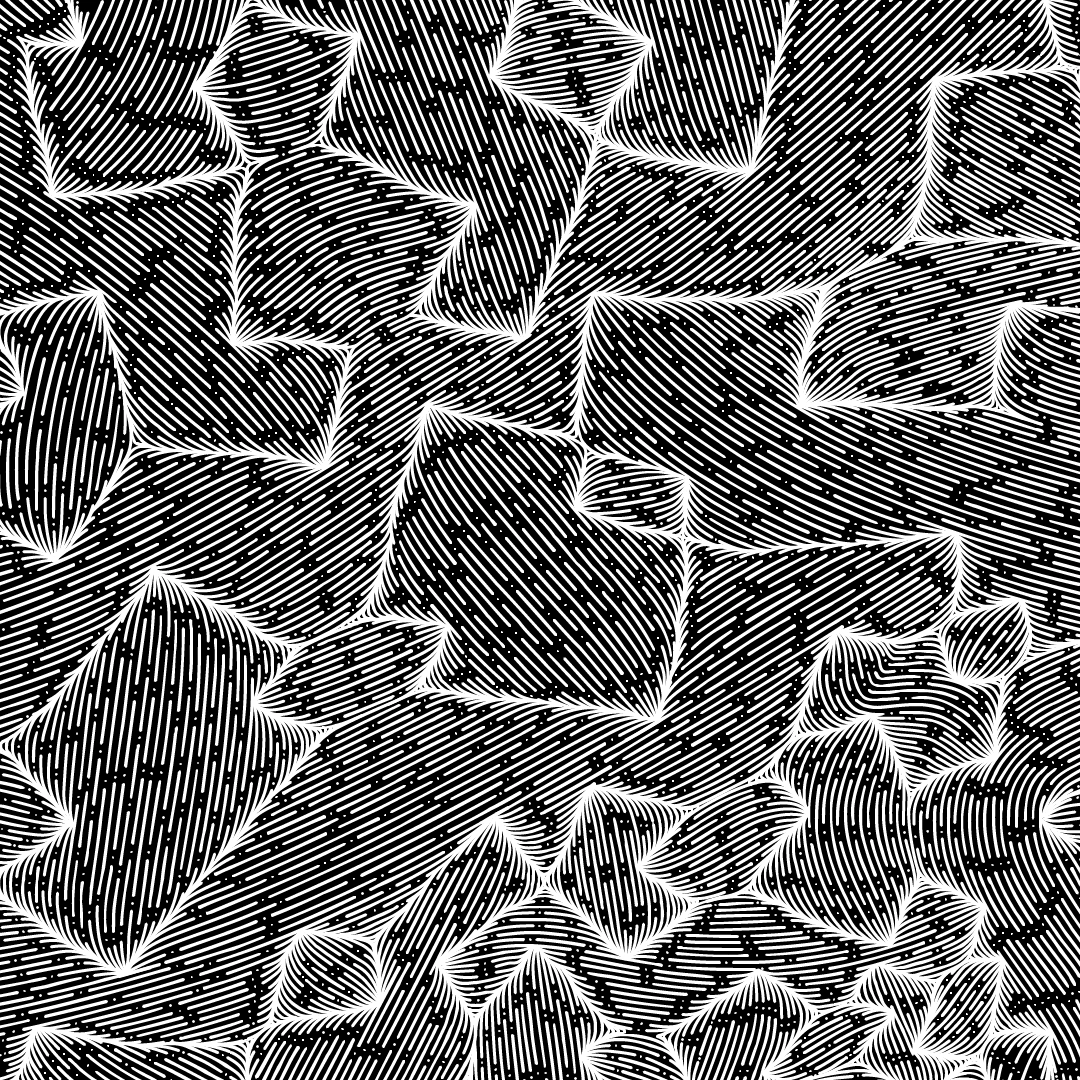
Reignition Grammar
METODO
Re-gramma è uno studio sul design, sulla forma e sulla costruzione visiva dello spazio. Questo documento nello specifico non intende teorizzare nulla sul piano fisico o scientifico. I richiami a questi campi servono come strumenti di lettura: aiutano a formalizzare il metodo, studiarlo nel dettaglio e chiarire alcune analogie morfologiche e strutturali emerse nel processo.
Il metodo nasce da una pratica di lungo corso (11 anni) sviluppata attraverso il disegno manuale. Partendo da una figura, o da una matrice, si costruisce lo spazio interno attraverso propagazioni successive di linee fino a condurre la figura verso una zona interna di equilibrio.
Le linee generano di fatto un campo interno attraverso il loro accumulo. Se prendiamo in esame una matrice ad esempio, con l’avanzare del processo, la sua evidenza diminuisce fino a scomparire. La matrice iniziale non viene cancellata: viene letteralmente assorbita dal campo che genera e continua ad agire come memoria strutturale interna del processo.
LOGICA DI BASE
Il metodo può essere letto così:
- esistono dei poli iniziali;
- dai poli si attiva una propagazione ritmica;
- le propagazioni si incontrano e definiscono soglie interne;
- dagli incontri emergono nuovi nodi;
- il campo si addensa fino alla saturazione.
Il risultato che si ottiene non coincide né con una semplice regola grafica né con l’immagine conclusiva. Coincide con il processo stesso di formazione, reso visibile nel suo svolgimento.
PRINCIPI DEL METODO
Propagazione concorrente — Il campo nasce dall’interazione tra fronti multipli che avanzano simultaneamente.
Saturazione e collasso — L’accumulo progressivo delle linee conduce a una condizione di equilibrio interna che spesso si manifesta come centro della figura.
Dissoluzione della matrice — La matrice iniziale viene progressivamente assorbita dal campo che genera, restando attiva come struttura anche quando non è più visibile.
Struttura operativa del metodo
1. Dominio iniziale
2. Generatori
Da ciascun generatore si attiva una famiglia di linee. Il numero delle famiglie osservate dipende dalla struttura del dominio o dalla sua suddivisione operativa.
3. Propagazione
4. Concorrenza
5. Collisione
6. Struttura emergente
7. Reinnesco
8. Saturazione
9. Memoria della struttura
REINNESCO
Il reinnesco introduce una discontinuità nel processo: il campo non si limita a saturarsi, ma può riattivarsi a partire dalle strutture interne che genera.
Quando più propagazioni si incontrano, il nodo che ne risulta può diventare una nuova condizione attiva. Il processo non si arresta all’intersezione: può riavviarsi e procedere verso regioni ancora aperte del campo.
Inoltre, nuovi poli possono essere generati direttamente lungo una linea, alterando la matrice durante la fase interna della generazione senza rompere la coerenza del sistema. Questa possibilità non costituisce un’eccezione, ma una proprietà operativa del metodo: il dominio interno può essere ridefinito mentre il processo è in corso, generando nuove figure chiuse e nuove matrici da colmare.
La saturazione non coincide con un semplice riempimento. È una progressiva occupazione dello spazio residuo, fino al contatto di chiusura.
Il centro, quando appare, non è un obiettivo prestabilito ma una condizione emergente prodotta dalla convergenza delle linee verso una zona interna di equilibrio della figura. Nelle figure regolari questa condizione tende a manifestarsi con particolare evidenza, perché il campo trova nel centro geometrico un punto di equilibrio più stabile.
VARIABILITÀ
Una parte essenziale del metodo risiede nella sua natura manuale. Minime variazioni di curvatura, pressione, intervallo o continuità del segno non vengono trattate come errori da correggere, ma come componenti integrate nella struttura.
Il sistema non richiede una perfezione meccanica. Richiede coerenza di processo. La precisione non coincide con rigidità: coincide con la capacità di assorbire deviazioni locali senza perdere struttura e coerenza con le linee precedentemente tracciate.
MORFOGENESI VISIVA
La forma non viene progettata come immagine finale da riempire, ma prende corpo nel tempo attraverso la ripetizione di una regola semplice capace di generare complessità crescente.
In questo senso la struttura emerge progressivamente dall’interazione tra linee che si propagano, si incontrano e ridefiniscono il campo. L’organizzazione non è imposta da un controllo globale, ma nasce da relazioni locali, collisioni, soglie, reinneschi e saturazioni successive.
Il campo di linee generato dal metodo può essere letto, in senso descrittivo, come un campo scalare implicito che cresce progressivamente dall’esterno verso l’interno della figura. Le linee che emergono durante il processo possono quindi essere interpretate come livelli successivi di questo campo, determinati dall’interazione tra fronti concorrenti.
La figura finale non è quindi il punto di partenza del lavoro, ma l’esito visibile di un processo di formazione.
Il riferimento alla morfogenesi non implica una simulazione biologica o naturale in senso stretto. Serve piuttosto a chiarire che, nel metodo, lo spazio visivo si organizza gradualmente a partire da condizioni iniziali semplici.
PROPAGAZIONE E STRUTTURA
Voronoi, fronti e domini di influenza
Re-gramma funziona come un sistema di propagazione tra lati concorrenti. In questo senso i domini di influenza richiamano la logica di Voronoi: non perché il metodo si riduca a una partizione finale dello spazio, ma perché ogni fronte definisce il proprio dominio in rapporto ai fronti vicini.
La differenza decisiva è che Voronoi rende leggibile la distribuzione delle influenze e dei confini, mentre qui diventa visibile anche l’organizzazione interna del campo generato da quelle relazioni. Il centro, come detto in precedenza, non è assunto come dato iniziale ma può emergere come effetto dell’interferenza tra propagazioni convergenti.
Il comportamento del metodo mostra anche affinità con una logica di wavefront propagation o grassfire: fronti successivi avanzano nello spazio fino a incontrarsi. La distanza qui non appare come dato astratto, ma come processo di avanzamento, accumulo e collisione.
Asse mediale e struttura emergente
In alcune configurazioni, la saturazione progressiva del campo produce una struttura interna leggibile in rapporto all’asse mediale della figura.
Questo comportamento può essere messo in relazione, per analogia, con la logica della grassfire transform, un modello geometrico utilizzato per descrivere la propagazione simultanea di fronti a partire dai bordi di una figura. Quando questi fronti si incontrano, generano una struttura interna che corrisponde al cosiddetto asse mediale.
Nel metodo Re-gramma avviene qualcosa di simile sul piano grafico: le linee si propagano dai lati o dai poli della figura e, incontrandosi, producono nodi e soglie interne che rendono leggibile una struttura centrale.
La differenza rispetto ai modelli geometrici classici riguarda la procedura: qui la medialità non viene derivata per estrazione analitica, ma appare come esito del processo di propagazione, incontro e chiusura delle linee.
Quando fronti provenienti da poli differenti si bilanciano, si formano soglie interne, creste e snodi. Queste zone non sono un residuo decorativo: sono l’esito strutturale del processo.
Tale struttura non coincide necessariamente con il medial axis euclideo canonico, ma si configura come una forma di medialità emergente o scheletro processuale.
RISONANZE GEOMETRICHE
Nel tempo si è riconosciuta una corrispondenza visiva tra il metodo e alcune famiglie di curve note in geometria.
Il riferimento primario è scattato con Gabriel Lamé e riguarda soprattutto una parentela morfologica. Nelle superellissi da lui ottenute si riconosce una qualità formale vicina a quella di molte curve generate dal metodo.
Il riferimento a Minkowski è, in alcuni casi, più diretto sul piano della lettura morfologica. Nel quadrato colmato dal metodo emergono curve che possono essere lette in rapporto a configurazioni di tipo minkowskiano. Con la differenza che, in una lettura minkowskiana del piano, le linee possono estendersi idealmente nell’infinito cartesiano, mentre in Re-gramma restano vincolate alla figura geometrica, contenute nel suo dominio e orientate dai suoi poli o dalle sue intersezioni.
Il metodo non costruisce quindi il campo come una metrica cartesiana o minkowskiana applicata in modo uniforme. Le famiglie di linee vengono generate entro la figura secondo una logica di propagazione e interferenza, ma il loro numero, la loro densità, il loro spessore e la loro qualità grafica restano variabili operative aperte.
Per questo motivo Lamé e Minkowski non vengono assunti come modelli applicati, ma come riferimenti utili a descrivere somiglianze morfologiche reali osservate nello studio del processo visivo.
PROIEZIONI IMPLICITE E STRUTTURE EMERGENTI
In alcune configurazioni la figura centrale assume una deformazione curvilinea che, dal punto di vista visivo, può ricordare configurazioni iperboliche. Questa analogia resta descrittiva: il metodo opera interamente nel piano euclideo.
Nelle figure regolari il campo generato dal metodo rende visibile una struttura spaziale implicita più complessa. Nel caso del quadrato, la convergenza delle linee verso il centro produce una configurazione che richiama una struttura piramidale: non perché il metodo costruisca un oggetto tridimensionale, ma perché il comportamento del campo nel piano rende leggibile una tensione spaziale orientata verso un apice centrale. In questo senso, il quadrato può essere letto anche come una sequenza di livelli che ricorda una piramide a base quadrata osservata dall’alto.
Lo stesso principio si osserva anche in altre figure regolari. Il triangolo ad esempio suggerisce configurazioni riconducibili a una logica tetraedrica. Questa relazione emerge in modo evidente anche confrontando figure regolari diverse: un triangolo tende a generare una struttura interna con simmetria triangolare, un quadrato una configurazione con simmetria quadrata, mentre poligoni con un numero maggiore di lati producono strutture radiali più articolate. In questo senso la struttura del campo eredita direttamente la simmetria del dominio iniziale.
Questa relazione resta morfologica e non letterale. Re-gramma opera interamente nel piano. In alcune condizioni, però, il comportamento delle linee rende visibili relazioni spaziali che assumono il carattere di proiezioni implicite di forme tridimensionali.
RISONANZE CON GEOMETRIE TRADIZIONALI
Alcune configurazioni generate dal metodo presentano affinità visive con pattern geometrici tradizionali, come quelli utilizzati nella lavorazione giapponese del legno (kumiko), in particolare nelle reti triangolari note come asa-no-ha.
La somiglianza, anche in questo caso, è di natura morfologica. In entrambi i casi emergono configurazioni basate su triangolazioni locali e su equilibri tra tensioni lineari.
La differenza è sostanziale. Nei pattern tradizionali la geometria viene costruita attraverso una griglia modulare progettata a priori. Nel metodo Re-gramma, invece, tali configurazioni non sono disegnate direttamente, ma emergono come effetto della propagazione delle linee, delle collisioni tra fronti e della saturazione progressiva del campo o delle figure geometriche date.
Il riferimento ai pattern tradizionali serve quindi come strumento di lettura visiva, non come modello costruttivo del metodo.
FABBRICAZIONE ADDITIVA E STRUTTURE DI RIEMPIMENTO
La logica del metodo presenta una possibile estensione concettuale anche nel campo della fabbricazione additiva. Nella stampa 3D l’interno degli oggetti non viene normalmente riempito in modo pieno, ma tramite strutture di riempimento progettate per distribuire il materiale, contenere il peso e stabilizzare il comportamento dell’oggetto stampato.
Tra i riempimenti attualmente più diffusi si trovano griglie ortogonali, triangoli, esagoni, pattern cubic o octet, strutture gyroid e riempimenti concentrici. Ciascuno di questi sistemi definisce una grammatica operativa interna: alcune configurazioni privilegiano la ripetizione modulare, altre la continuità del percorso, altre ancora una distribuzione più omogenea delle tensioni nello spazio.
Re-gramma entra in relazione con questo ambito perché anche qui lo spazio interno viene costruito attraverso una regola iterativa applicata entro un dominio definito. La differenza sta nel comportamento della linea e nel modo in cui il campo si organizza: nel metodo, la struttura non segue una semplice famiglia di offset o una tassellazione ripetuta, ma si forma tramite propagazioni concorrenti, incontri locali, nodi e saturazione progressiva.
Confronto con riferimento concentrico
Il confronto più utile, all’interno della stampa 3D, riguarda il riempimento concentrico. In quel caso il software genera offset successivi del perimetro dell’oggetto: le traiettorie interne seguono il contorno e ne ripetono progressivamente la forma verso l’interno.
Nel metodo Re-gramma la logica è diversa. Le linee non derivano da una contrazione seriale del bordo, ma da una propagazione attivata da poli o lati che avanzano nello spazio e si determinano reciprocamente attraverso contatti, collisioni e ridefinizioni locali del dominio.
Nel riempimento concentrico la parentela tra ogni traiettoria e il perimetro resta diretta e costante. Nel metodo, invece, la linea può curvarsi, densificarsi, interrompersi, cambiare regime o produrre nuove soglie interne in funzione delle relazioni che incontra lungo il processo.
Per questo motivo alcune configurazioni del metodo possono richiamare visivamente un comportamento concentrico, soprattutto nelle figure regolari già molto sature, ma la somiglianza resta morfologica. La procedura che genera il campo è diversa: nel riempimento concentrico domina l’offset del contorno; in Re-gramma domina la relazione progressiva tra fronti concorrenti all’interno della figura.
Questa distinzione ha valore sia teorico sia applicativo. Chiarisce che eventuali analogie formali con i riempimenti concentrici non riducono il metodo a una semplice tecnica di offset, e suggerisce che il comportamento di Re-gramma potrebbe essere studiato anche come possibile grammatica di riempimento adattivo. Questa prospettiva va intesa, allo stato attuale, come un’estensione concettuale del metodo e non come un’applicazione tecnica già verificata. Un’eventuale validazione in ambito strutturale richiederebbe test specifici, simulazioni e confronto con le grammatiche di riempimento già in uso nella fabbricazione additiva.
FORMALIZZAZIONE COMPUTAZIONALE
Alcune logiche del processo risultano già leggibili e testabili in figure geometriche regolari; l’estensione completa del metodo a sistemi più complessi resta parte della ricerca aperta.
La componente algoritmica non sostituisce il metodo. È una linea di studio utile per verificare comportamenti, limiti e potenzialità della struttura generativa.
Allo stato attuale la formalizzazione computazionale traduce solo una parte del metodo. Il comportamento del reinnesco manuale, la ridefinizione interna del dominio e la possibilità di modificare operativamente la matrice durante il processo non risultano ancora replicati in modo pienamente fedele nel codice.
Il metodo nasce dalla pratica e conserva una natura aperta, processuale e variabile; la ricerca computazionale lavora come estensione e strumento di verifica.
CONSIDERAZIONI FINALI
1) Relazioni su Oggetto: Data una matrice, l’accumulo delle linee dissolve progressivamente i singoli elementi di partenza (le celle). Ciò che diventa leggibile non è più lo schema iniziale, ma le relazioni e le tensioni che si instaurano tra i poli.
2) Costruzione per Accumulo: Lo spazio non è dato, ma costruito. Da un piano vuoto si sviluppa una superficie complessa attraverso l’applicazione ripetitiva e paziente di una regola elementare. Il campo si definisce per continuità, sovrapposizione e progressivo addensamento delle linee.
3) Formazione dello Spazio: Il metodo non descrive uno spazio, ma osserva come lo spazio si forma. Non è una rappresentazione statica, ma la traccia visibile di un comportamento geometrico che evolve mentre viene eseguito.
4) Integrazione della Variabile: Il processo accetta la natura manuale dell’esecuzione. Le lievi deviazioni nella curvatura o nella distanza non vengono corrette come errori, ma assorbite dalla struttura. Il sistema è sufficientemente robusto da integrare queste irregolarità, trasformando una geometria rigida in una configurazione più fluida.
5) Dinamica Emergente: Pur partendo da una matrice geometrica semplice e regolare, l’esito è una configurazione dinamica. La struttura iniziale passa progressivamente in secondo piano, sostituita da nuove direzioni suggerite dal fluire delle linee. Durante il processo è possibile introdurre nuove linee che ridefiniscono localmente il dominio della figura. In questi casi si genera una nuova configurazione chiusa che diventa a sua volta una matrice operativa da colmare. Ogni intersezione o nuova linea può quindi riattivare il processo, permettendo al campo di continuare a espandersi e trasformarsi.
Esempi ed esperimenti
